
Fox Classic Hunter vs Nosler E-Tip
Both are alloy monolithics with polymer tips. What actually separates the Fox Classic Hunter from the Nosler E-Tip.
Last updated 28 July 2026
The Nosler E-Tip is a lead free, polymer-tipped monolithic made from gilding metal; a copper-zinc alloy. That makes it the closest analogue to the Fox Classic Hunter of any bullet in this comparison set, and it means the usual alloy-versus-pure-copper argument does not do much work here.
Same family, different ratio
Gilding metal is conventionally around 95 per cent copper to 5 per cent zinc. Fox's CuZn10 is around 90/10. Both are copper-zinc alloys; Fox carries roughly twice the zinc, which makes it the harder of the two. Whether you can detect that difference across a chronograph or a cleaning rod is a fair question; the honest answer is that the gap between these two is far narrower than the gap between either and a pure copper bullet.
| Fox Classic Hunter | Nosler E-Tip | |
|---|---|---|
| Material | Copper-zinc alloy (CuZn10) | Gilding metal (copper-zinc) |
| Tip | Black thermo-stable polymer | Green polymer |
| Expansion | Meplat cavity depth | Energy Expansion Cavity |
| Origin | Slovenia | United States |
Design brief
The clearer distinction is intent rather than metallurgy. Nosler designs for the North American market and its game; animals that are generally bigger-bodied and thicker-hided than British deer. Fox develops on roe, fallow and red. For a stalker whose heaviest realistic quarry is a red stag, a bullet tuned to that end of the scale is a reasonable preference.
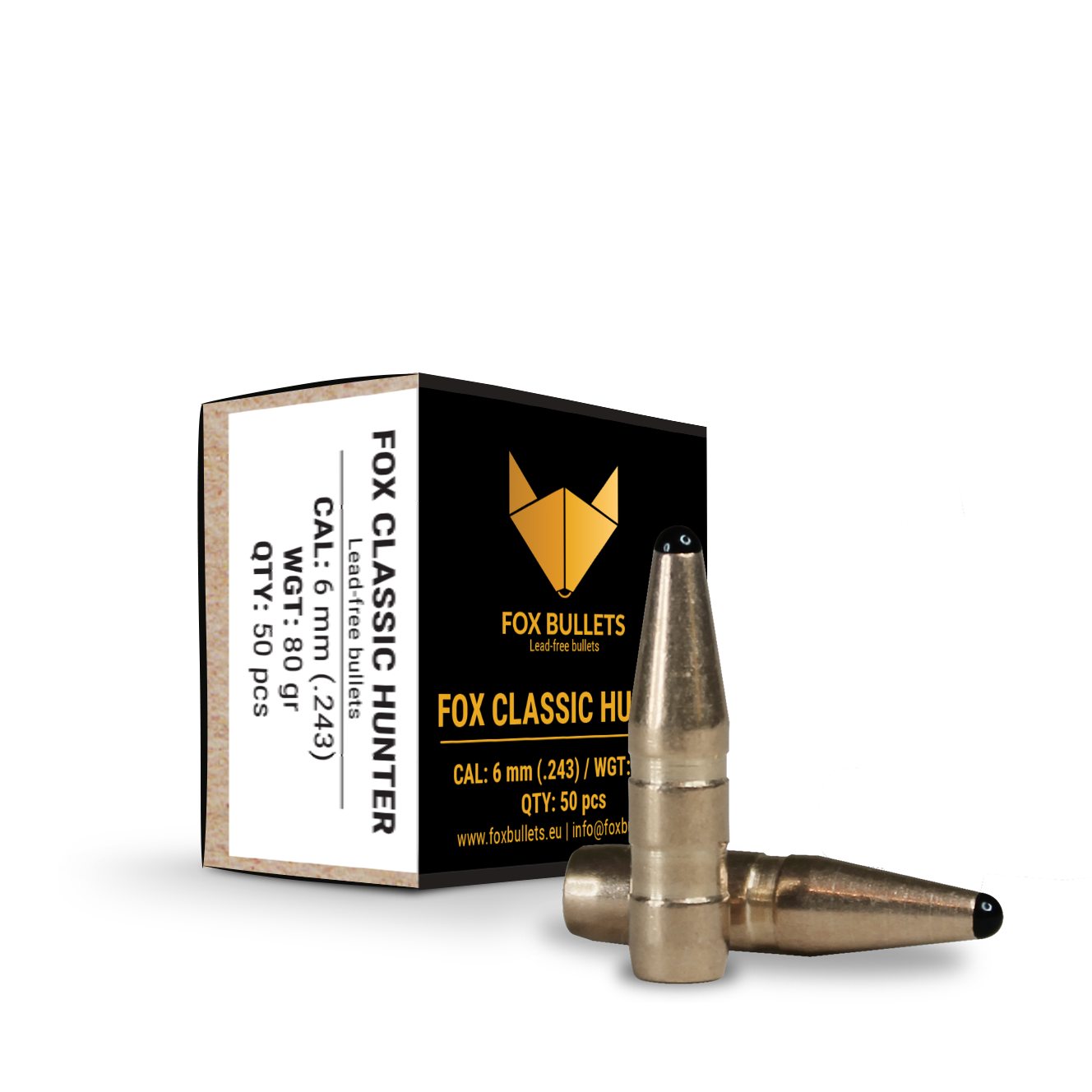
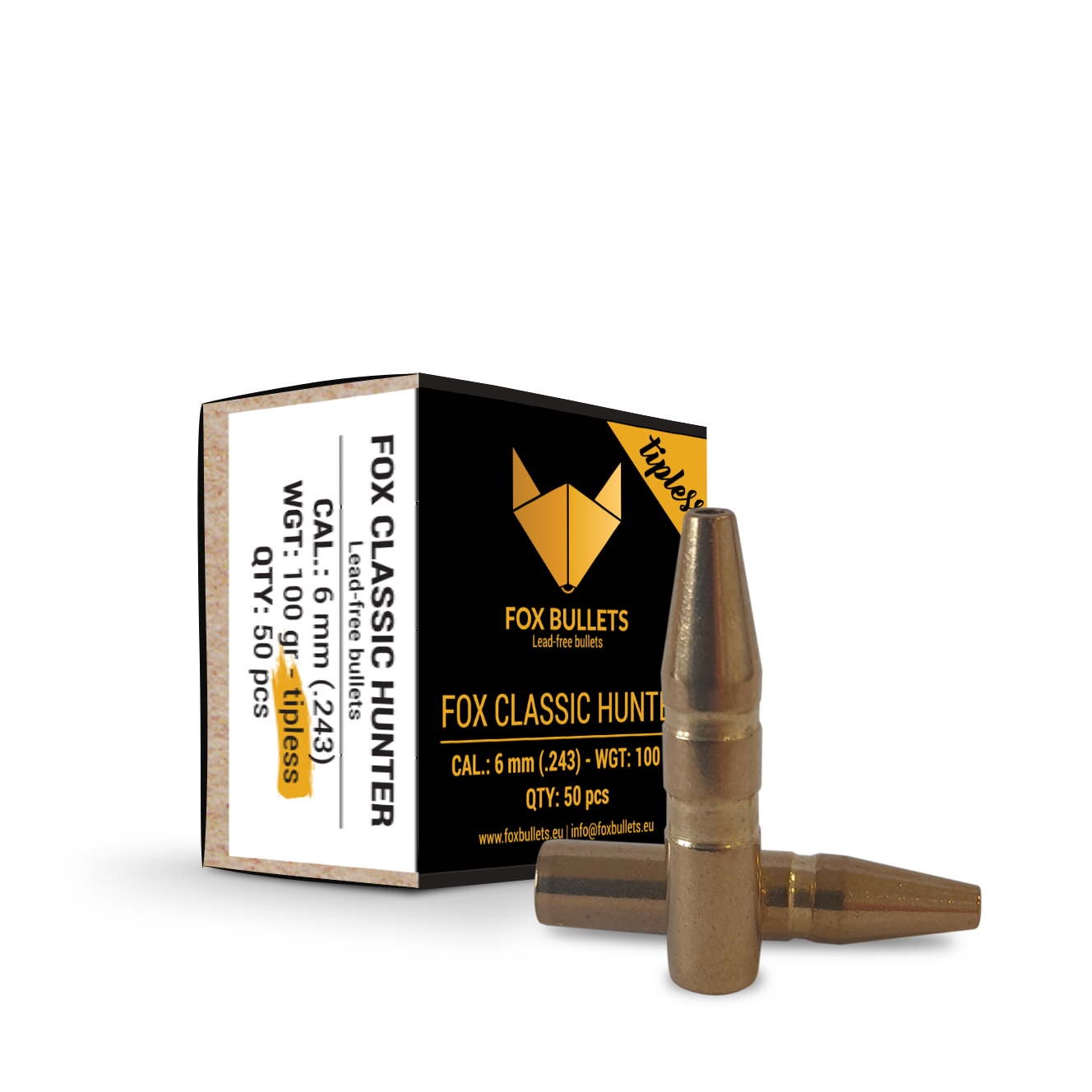
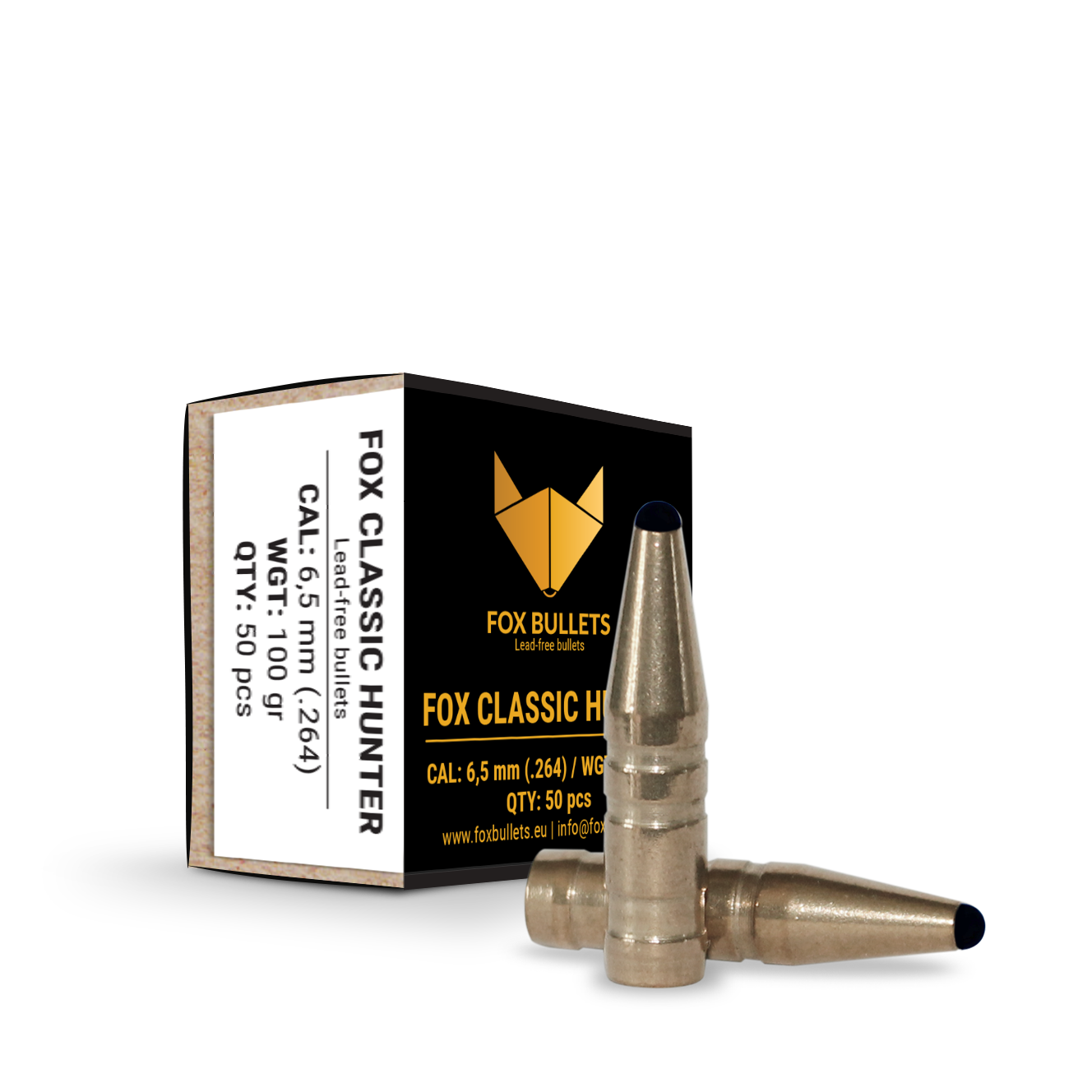
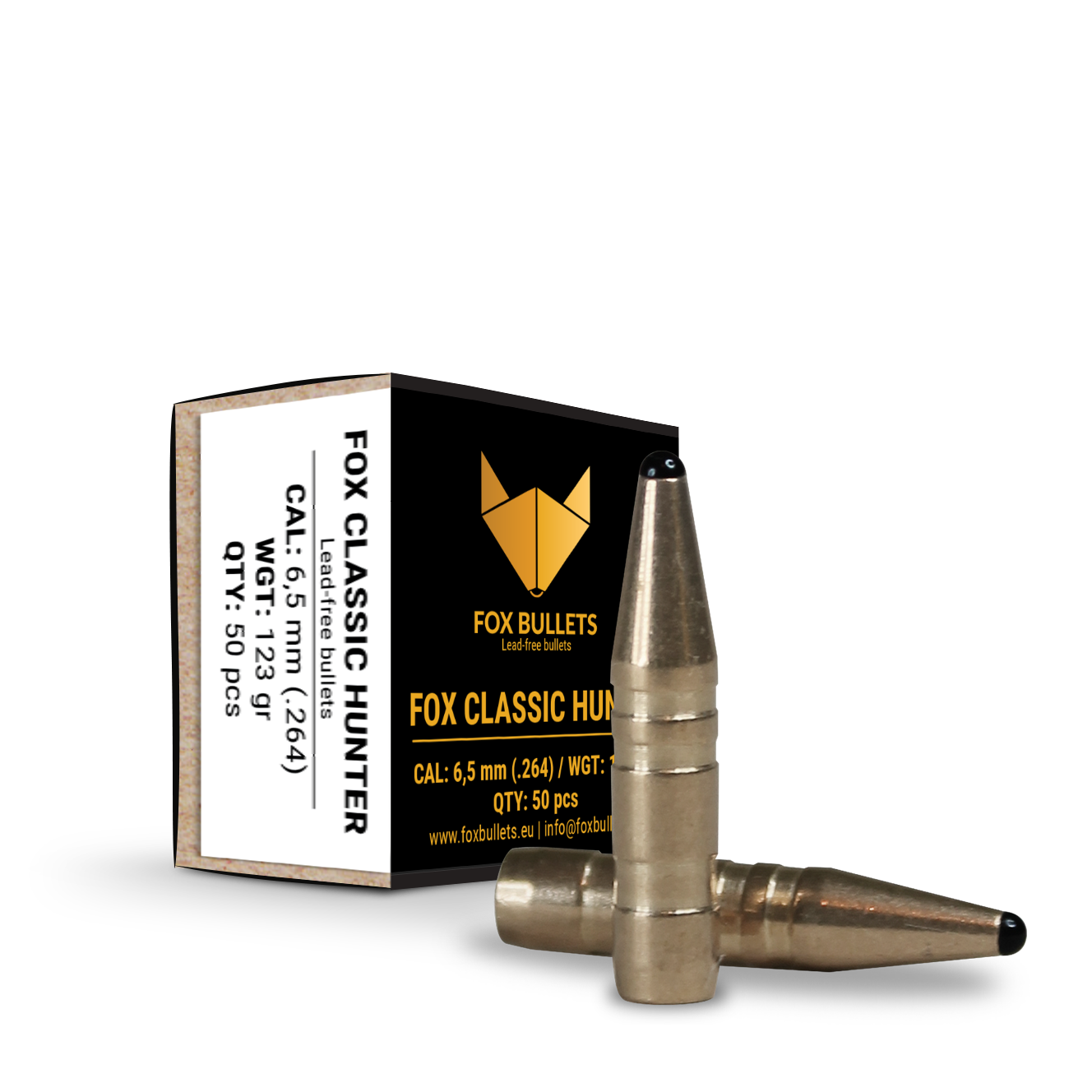
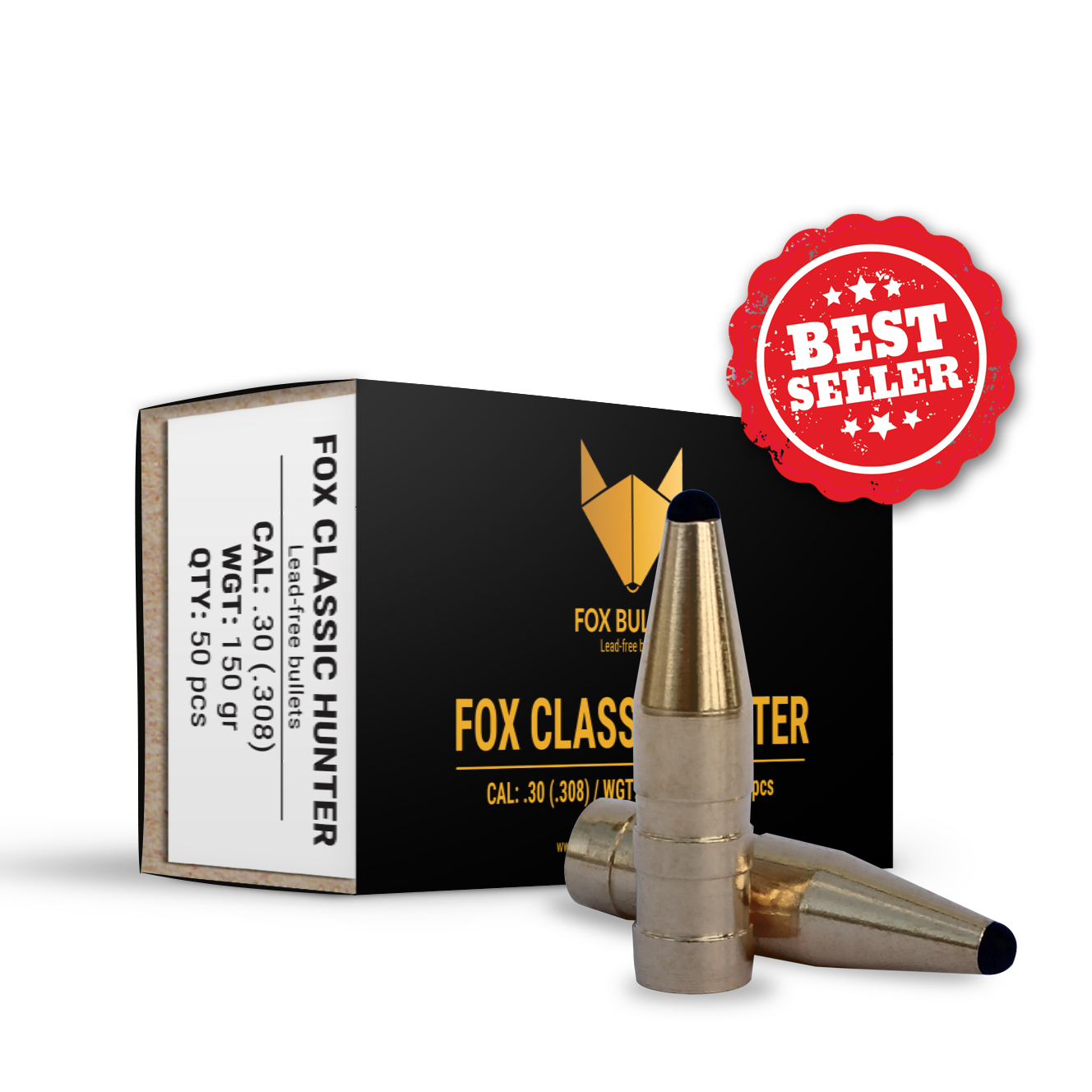
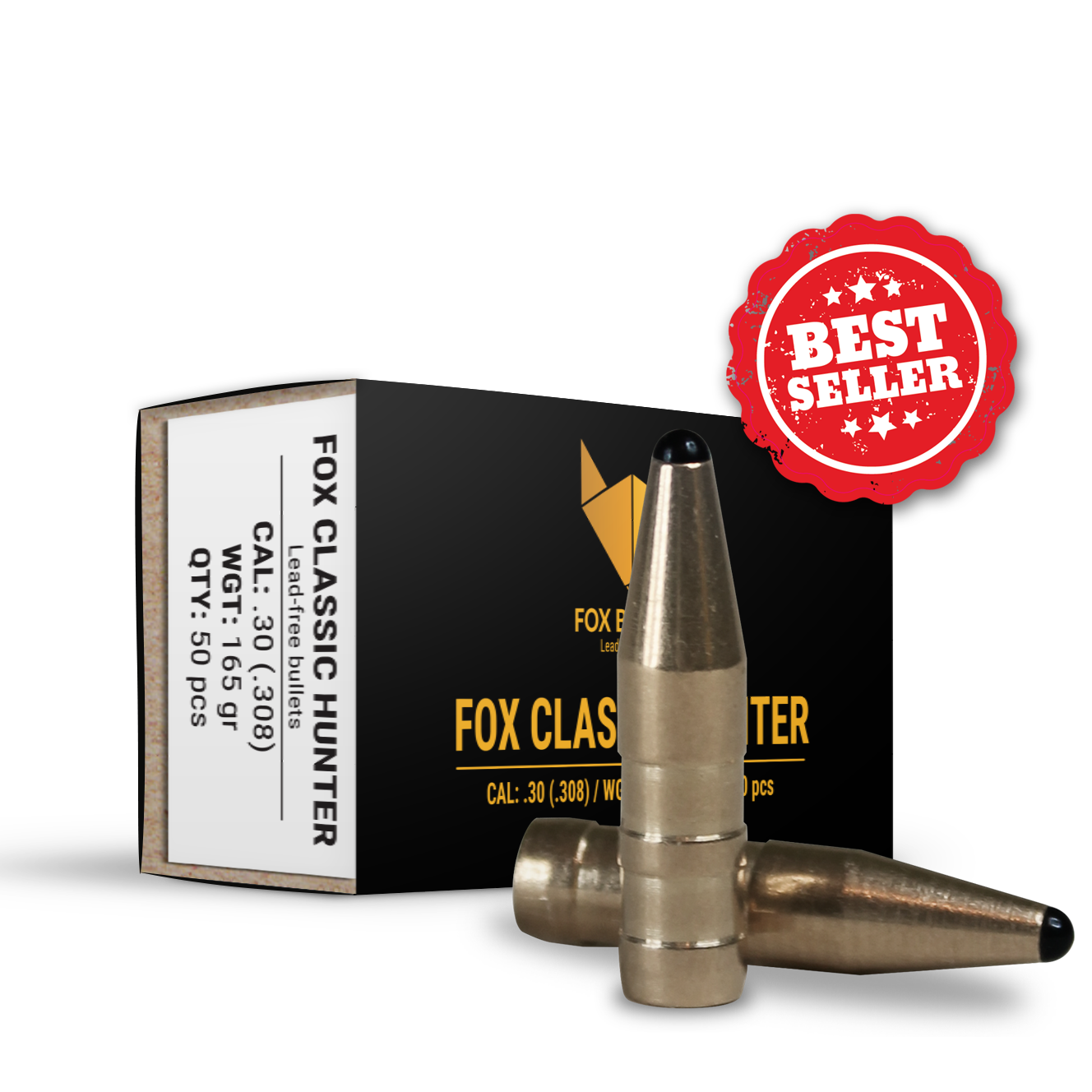
Fox Classic Hunter
Projectiles only: no powder, primers or loaded ammunition.
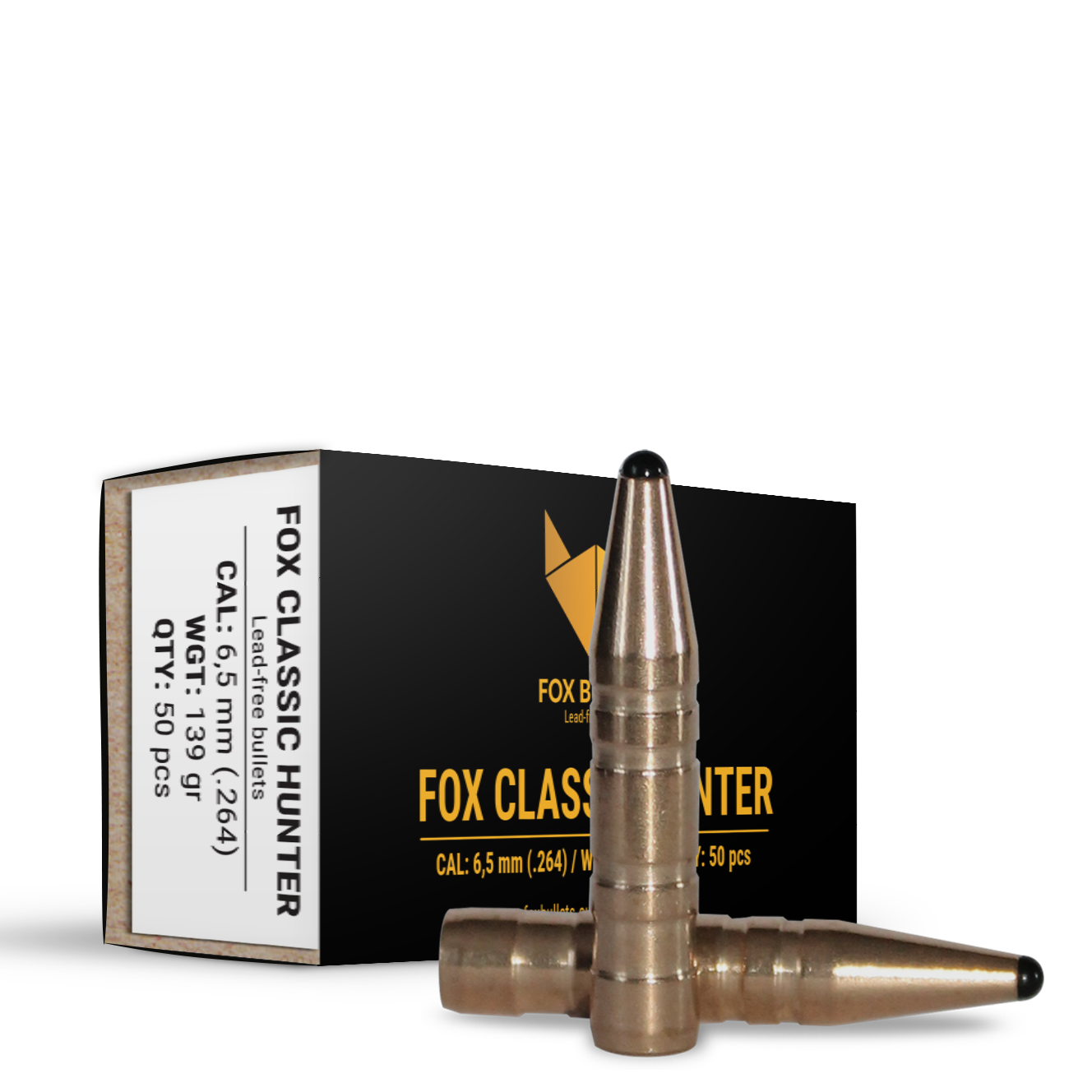
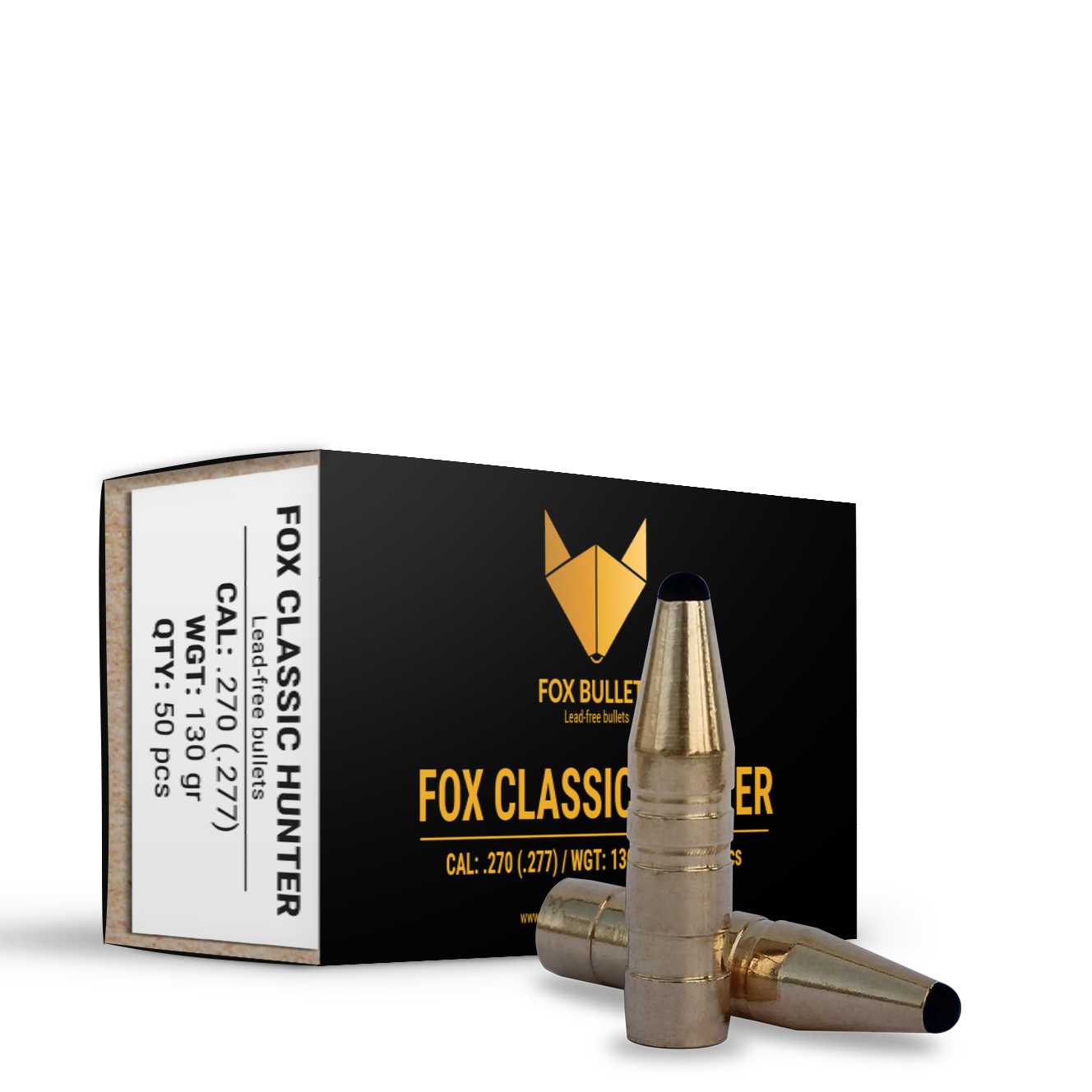
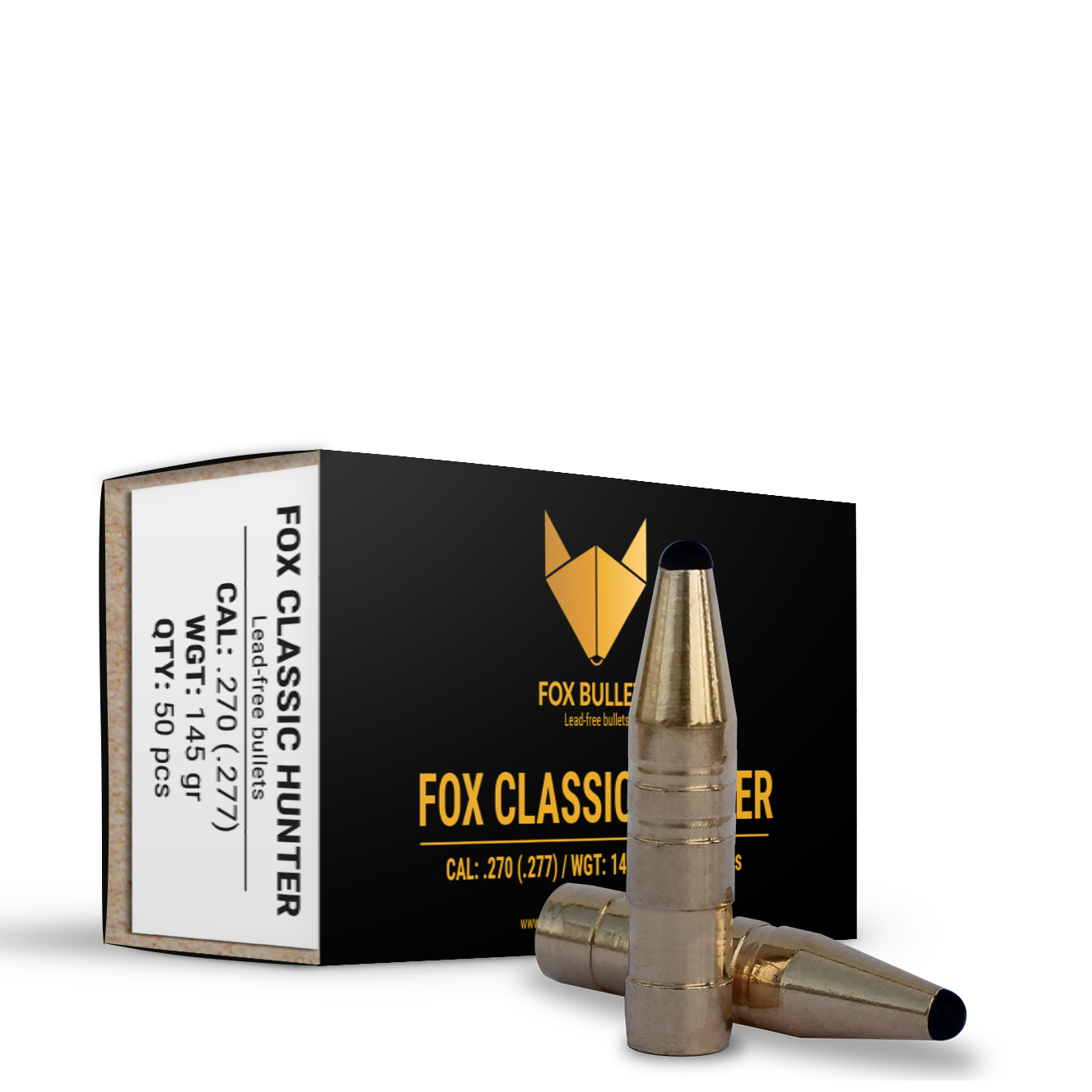
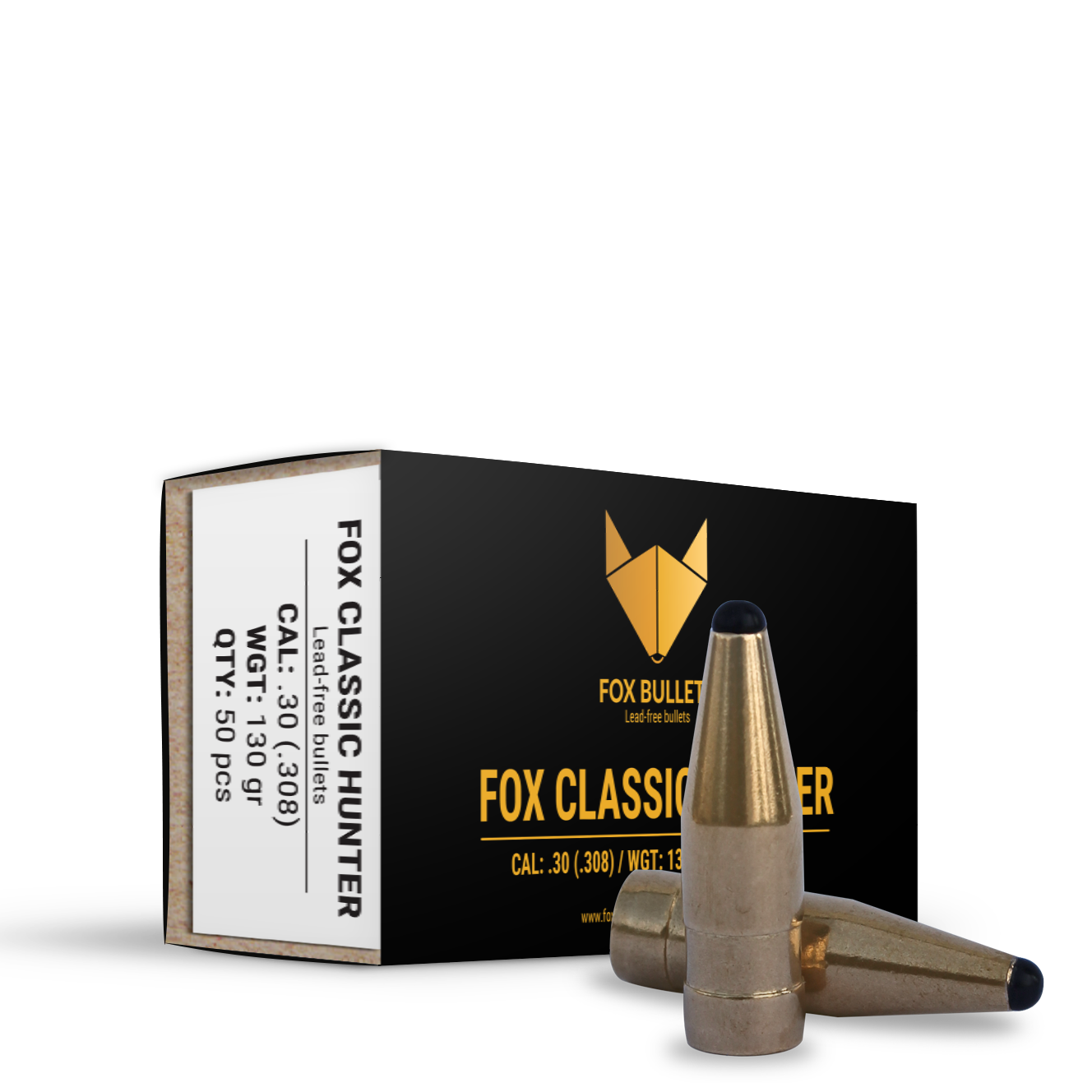
Is the Nosler E-Tip solid copper?
No. The E-Tip is made from gilding metal, which is a copper-zinc alloy: the same broad family as the Fox Classic Hunter's CuZn10, though with less zinc and therefore softer.
What is gilding metal?
A copper-zinc alloy conventionally around 95 per cent copper and 5 per cent zinc, long used for bullet jackets. Fox's CuZn10 is a harder alloy from the same family, at roughly 90/10.
Which expands more reliably?
Both use an engineered tip cavity rather than relying on material softness, so both are designed for controlled expansion. Reliable expansion depends on striking velocity, so match bullet weight to your cartridge and expected range rather than assuming any bullet opens at any speed.
Read next
Oxon Deer stocks the full Fox Classic Hunter range in 6mm, 6.5mm, .270 and .308, in boxes of 50. Browse the shop.