
How lead free bullets expand: meplat, polymer tip and petals
The mechanism behind controlled expansion in a monolithic bullet, and why the depth of the tip cavity is the design variable that matters.
Last updated 28 July 2026
Expansion is the whole point of a hunting bullet. A projectile that passes through an animal without opening up transfers very little of its energy and does a poor job. Getting reliable expansion out of a hard, lead free material is the central engineering problem of the monolithic bullet.
How a lead-core bullet does it
A conventional hunting bullet has a soft lead core inside a copper jacket. On impact the core deforms readily and drives the jacket outwards into the classic mushroom. It works because lead is soft, which is also why lead-core bullets frequently shed a large part of their weight in the process.
How a monolithic does it
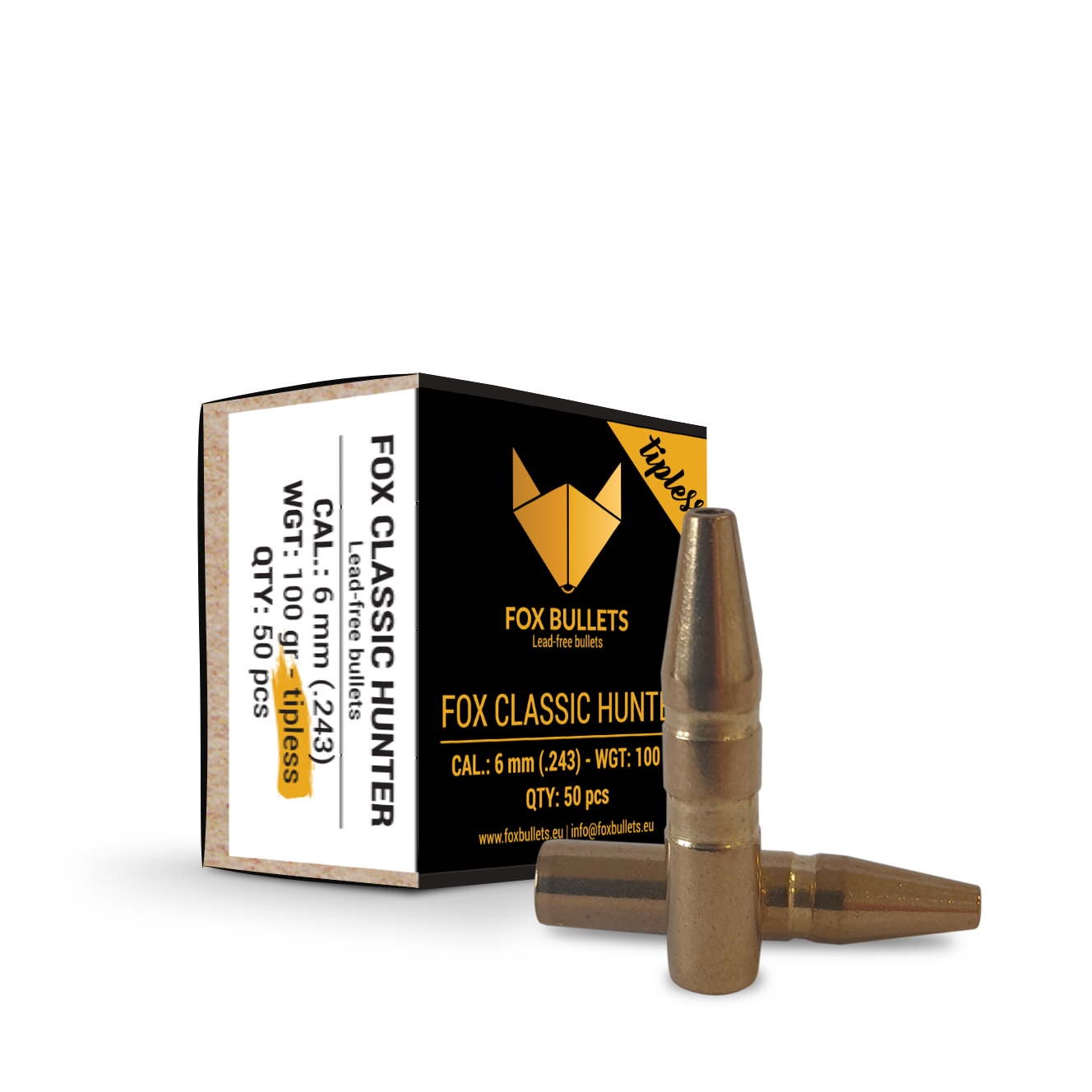
There is no soft core to rely on. Instead, expansion is designed in. The nose of the bullet is hollowed out into a cavity, the meplat, and on impact the resistance of tissue forces material outwards from that cavity, peeling the nose back into petals.
The critical point: the depth of that cavity determines how much the bullet expands. A deeper hollow gives more deformation, a shallower one less. Expansion becomes a controllable design parameter rather than a by-product of how soft the metal is. That is what allows Fox to use a harder copper-zinc alloy, with its advantages in consistency and fouling, without giving up terminal performance.
What the polymer tip does
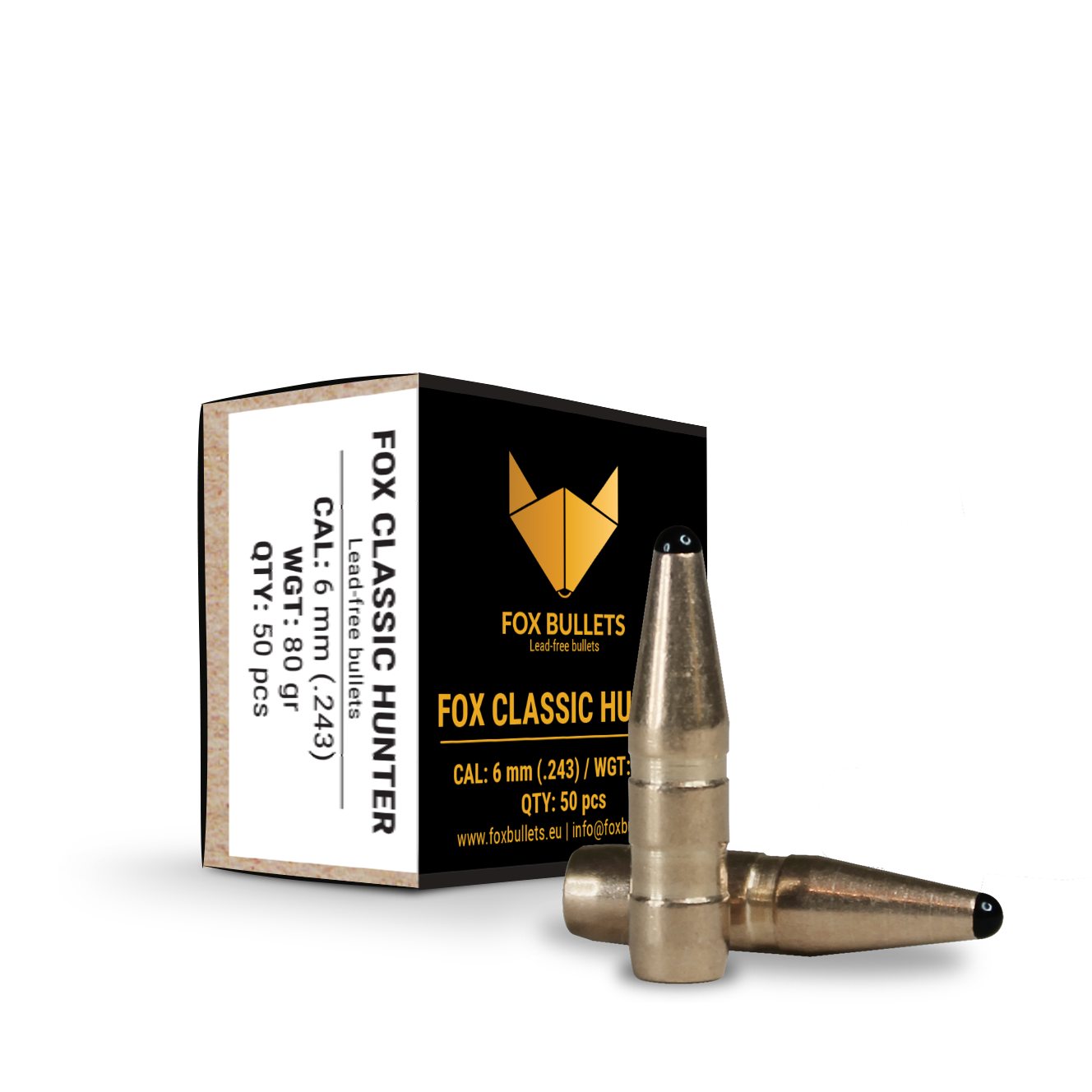
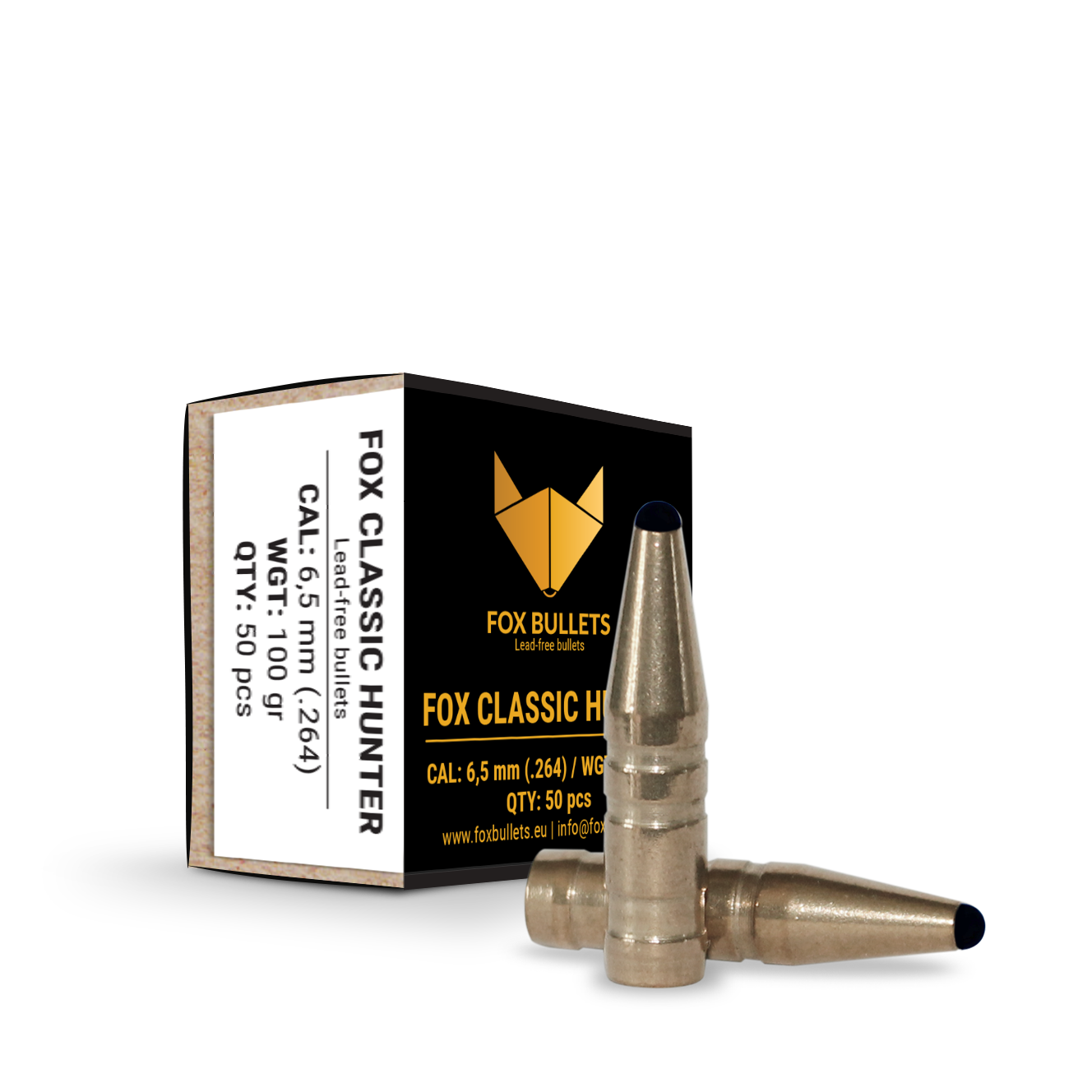
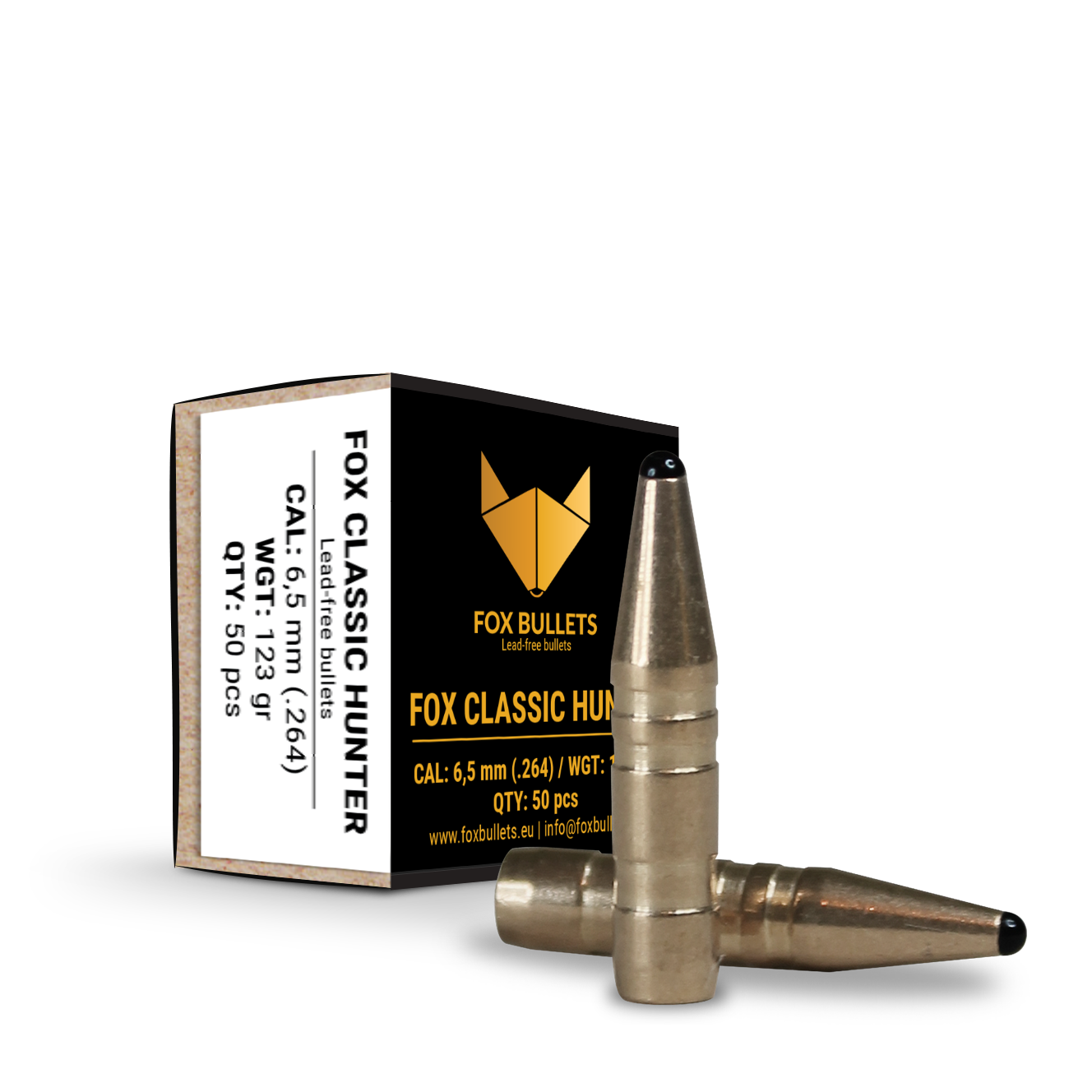
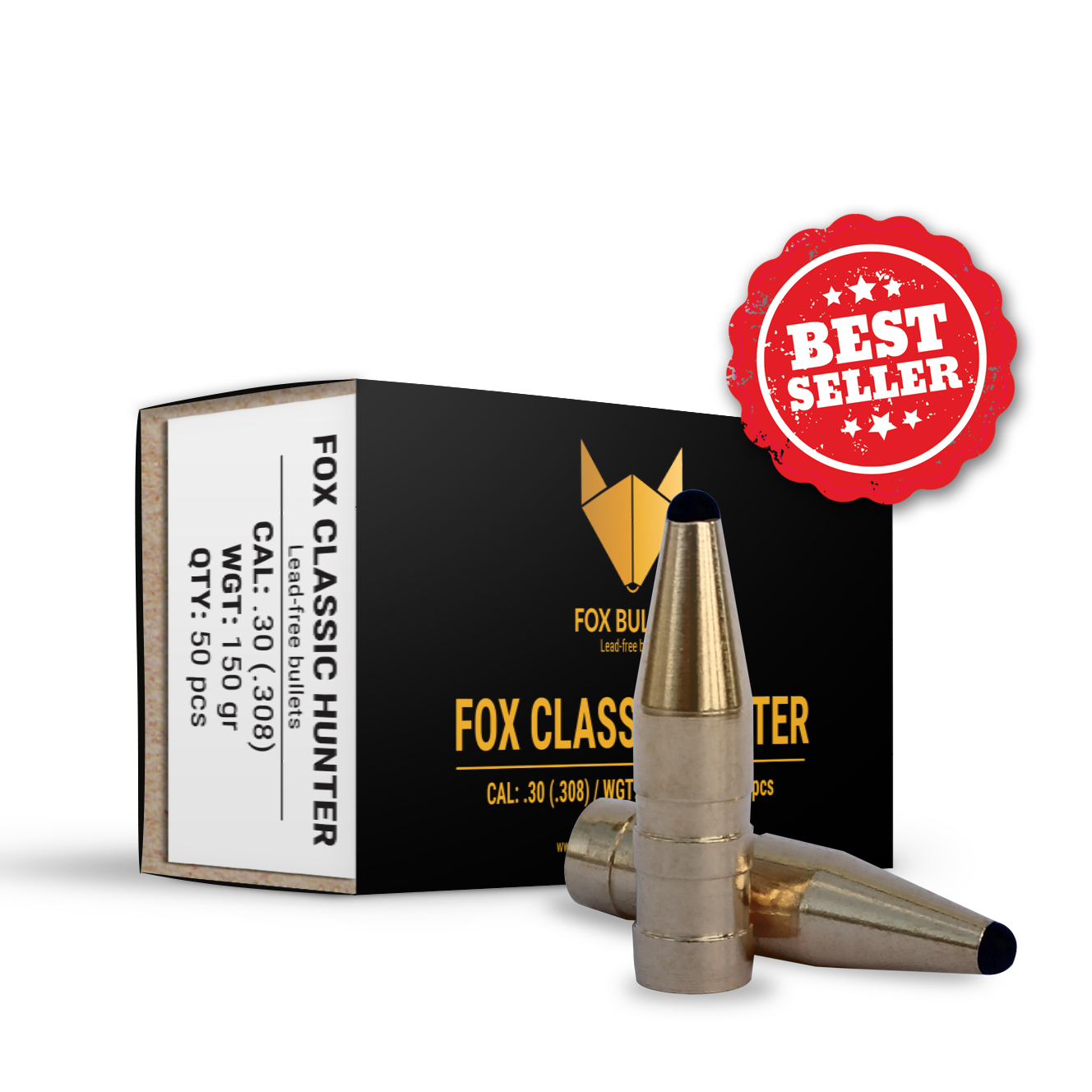
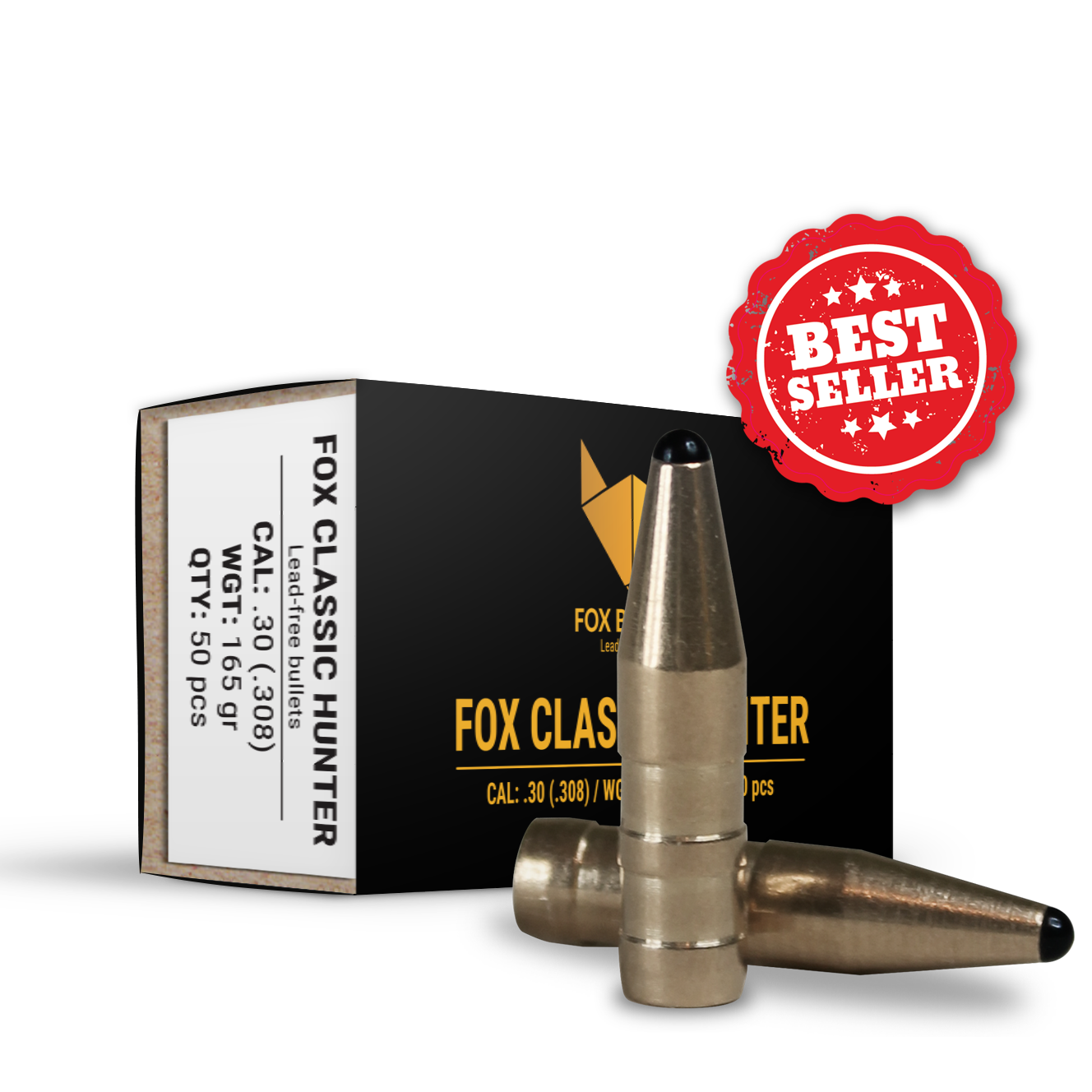
The black thermo-stable tip on a Fox Classic Hunter does two separate jobs, and people usually only think of one.
- In flight: it gives the bullet a sharp, aerodynamically efficient nose, raising the ballistic coefficient well above what an open hollow point would achieve. See ballistic coefficient explained.
- On impact: it is driven backwards into the cavity, acting as a wedge that initiates expansion reliably and immediately, rather than waiting for tissue to fill the hollow.
'Thermo-stable' matters because a bullet in flight heats up from air friction. Early polymer tips could soften or deform at high velocity, degrading the very ballistic coefficient they were fitted to improve. Heat-resistant polymers are the standard answer.
Velocity is the variable you control
This is the argument for matching bullet weight to expected range. A lighter, faster bullet arrives with more speed at close and moderate range; a heavier, higher-BC bullet holds its velocity better at distance. Neither expands if it arrives too slowly.
Weight retention
Because there is no core to separate from the jacket, a monolithic typically retains most of its weight after expansion; the petals peel back but stay attached to the shank. A bullet that stays intact keeps driving forward, which is why monolithics penetrate better than their grain weight suggests. It is also why less fragmented metal is left in the carcass, which is the point of the whole lead free exercise. More in terminal performance.
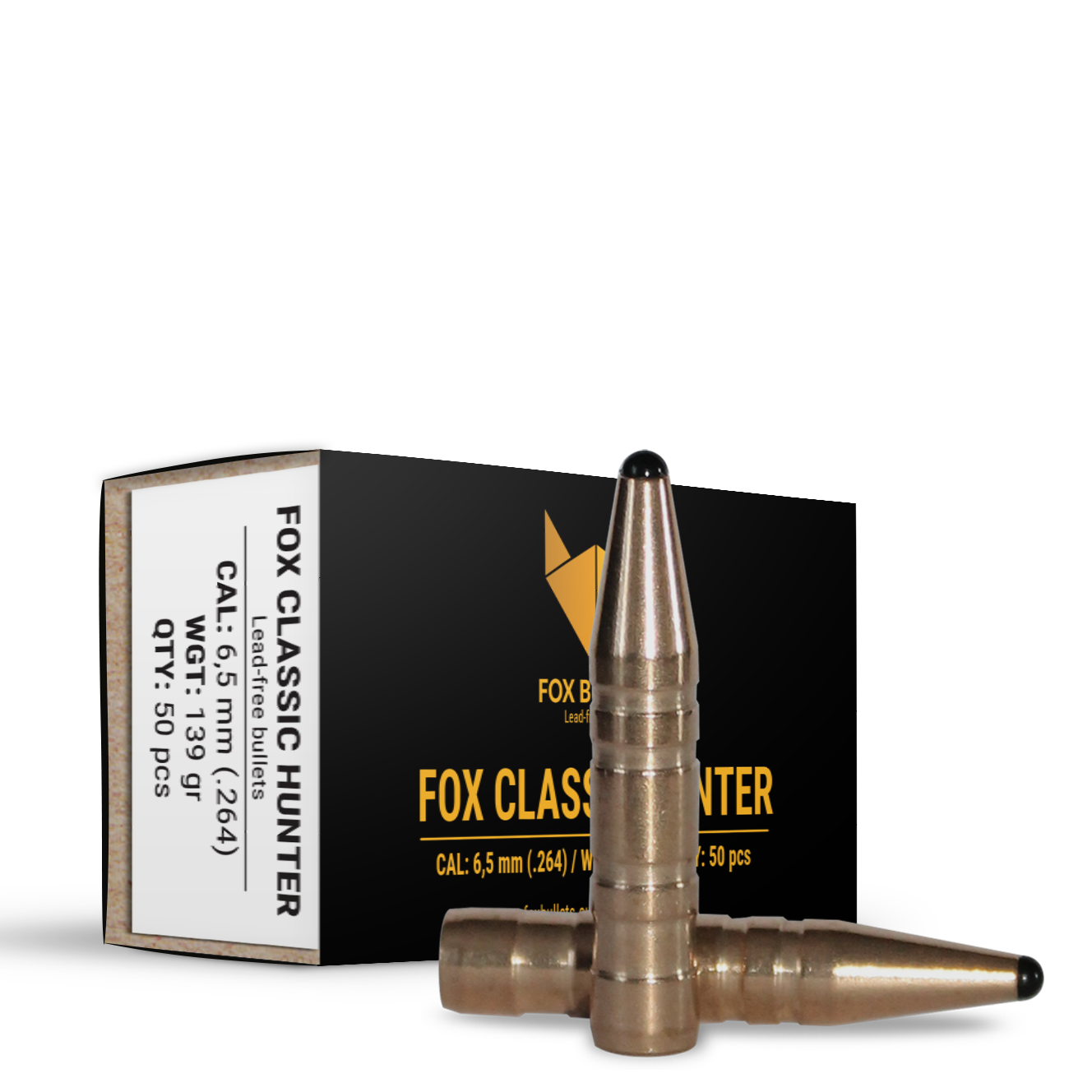
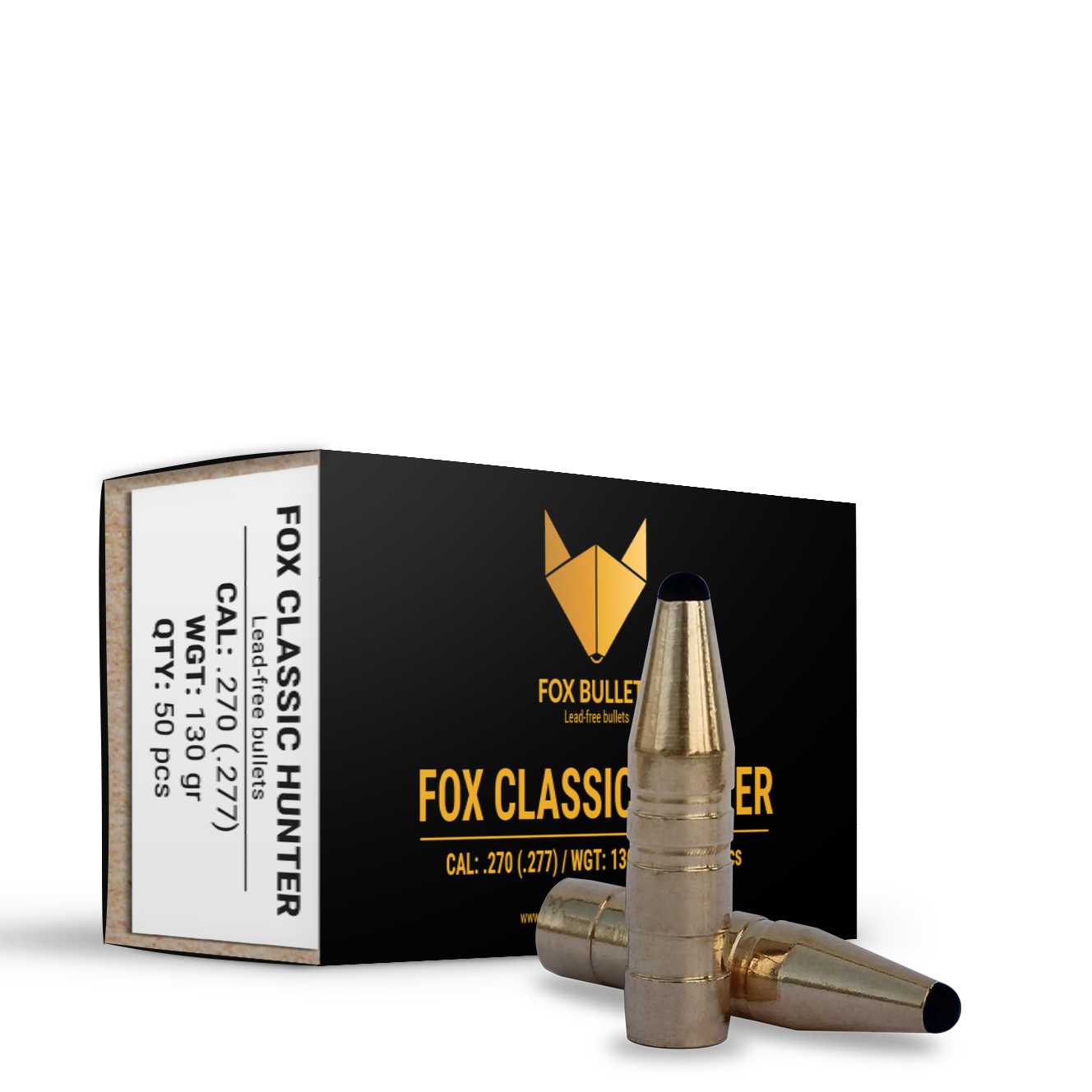
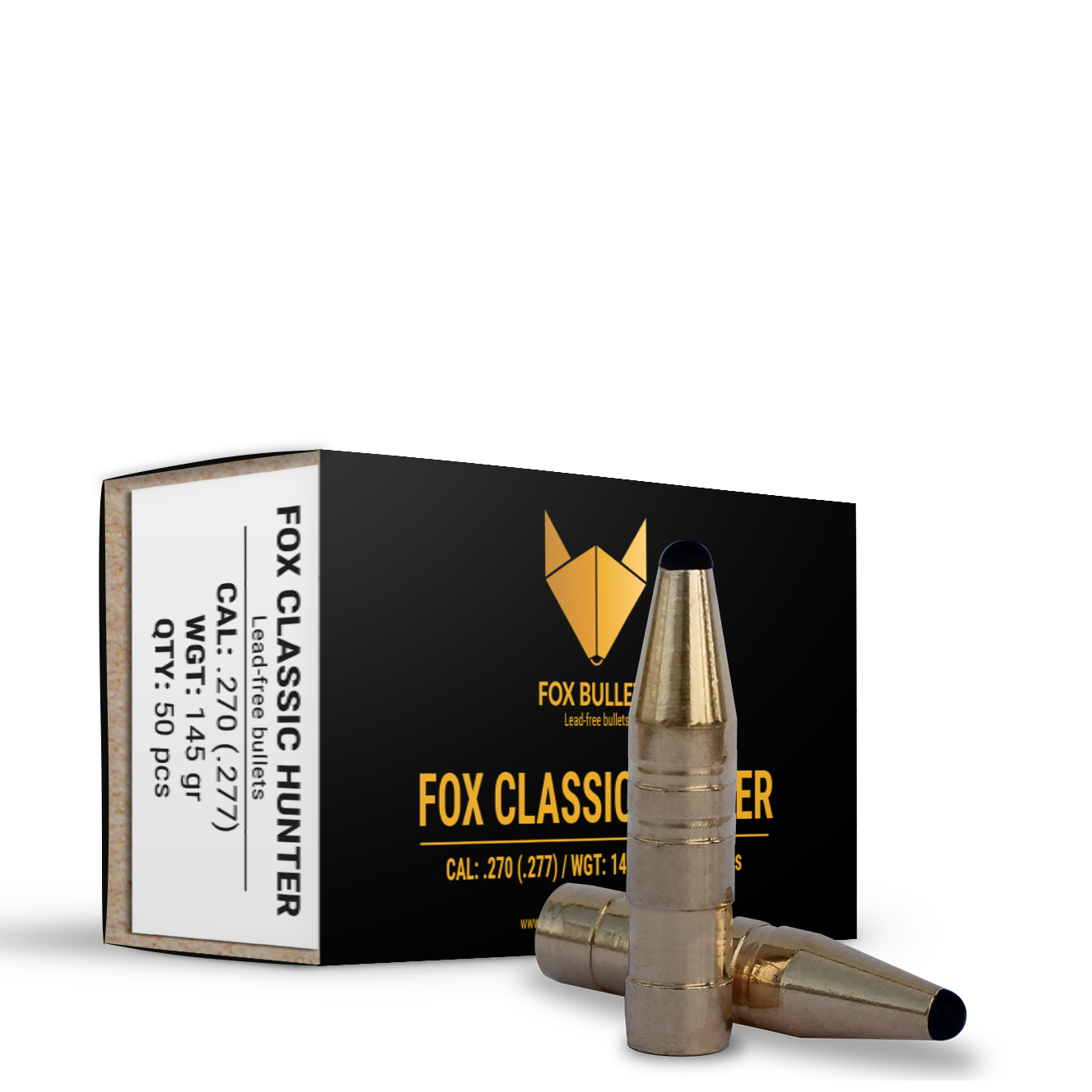
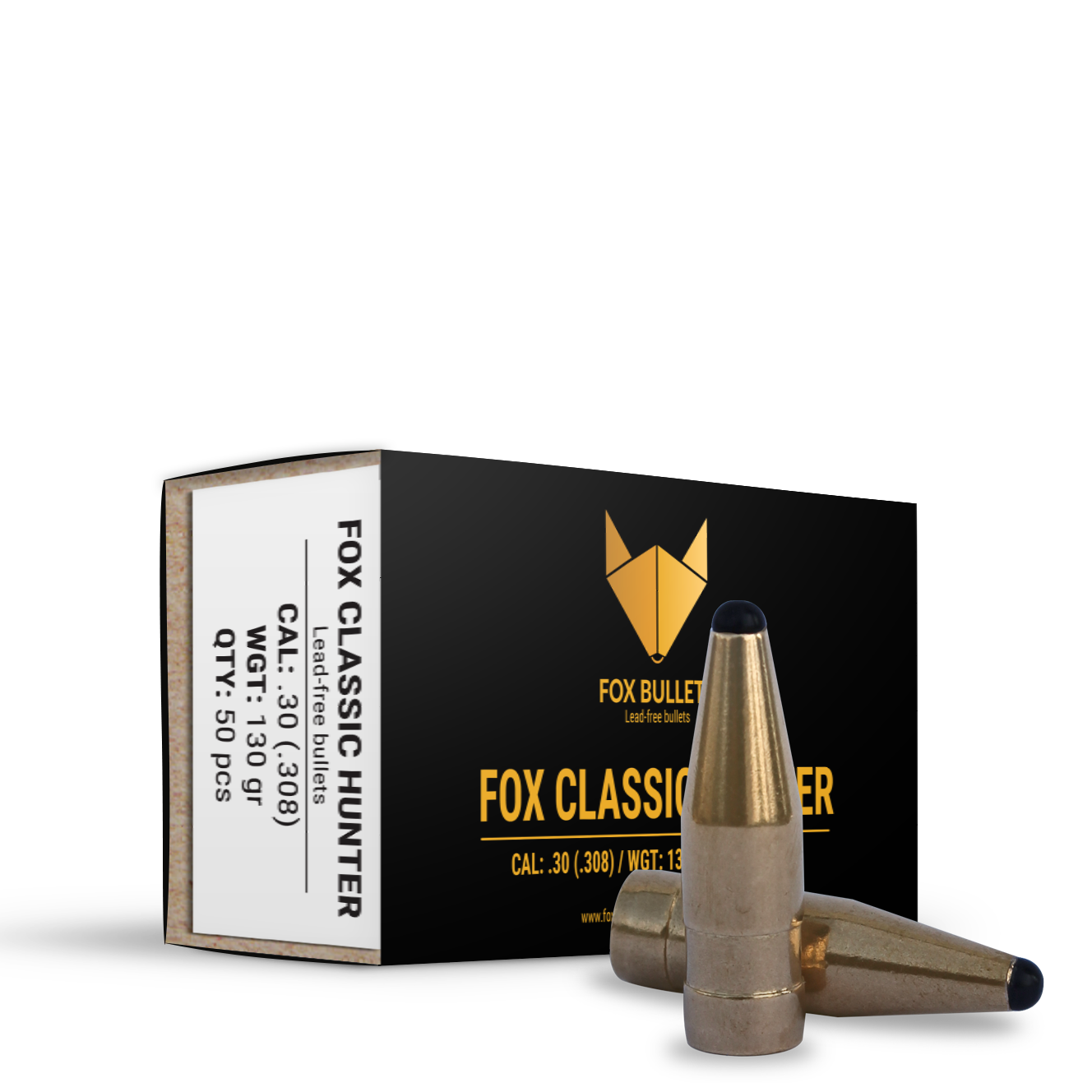
Fox Classic Hunter
Projectiles only: no powder, primers or loaded ammunition.
What is a meplat on a bullet?
The flat or hollow at the very tip of the bullet. On a monolithic hunting bullet the meplat is a cavity whose depth determines how far the bullet expands on impact.
What does the polymer tip on a Fox bullet do?
Two things. In flight it sharpens the profile and raises the ballistic coefficient. On impact it is driven back into the tip cavity and acts as a wedge to initiate expansion reliably.
Do lead free bullets expand as well as lead bullets?
A well-designed monolithic expands reliably within its intended velocity range and retains far more of its weight than a lead-core bullet. The trade-off is that expansion depends on impact velocity, so the practical range limit matters more.
Why do copper bullets form petals instead of a mushroom?
There is no soft core to squash outwards. Instead the hollow nose peels back into distinct petals as material is forced outwards from the cavity, which is the monolithic equivalent of the mushroom.
Read next
Oxon Deer stocks the full Fox Classic Hunter range in 6mm, 6.5mm, .270 and .308, in boxes of 50. Browse the shop.