
Copper-zinc alloy vs solid copper: which lead free bullet material is better?
Why some lead free bullets are turned from pure copper and others from a copper-zinc alloy, and what the difference means for accuracy, fouling and expansion.
Last updated 28 July 2026
Not all lead free bullets are made from the same thing. The two broad families are solid copper monolithics and copper alloy monolithics, and the choice of material affects almost everything else about how the bullet behaves. Fox Classic Hunter sits in the second camp, using a copper-zinc alloy designated CuZn10.
What the materials actually are
Pure copper is soft, ductile and easy to machine. A solid copper bullet is turned from bar stock and relies on a hollow point at the tip to peel open into petals on impact.
Copper alloys add another metal, almost always zinc, to change the properties. Gilding metal, used in a number of lead free bullets, is typically around 95 per cent copper. CuZn10, used in the Fox Classic Hunter, is around 90 per cent copper and 10 per cent zinc. More zinc means a harder, stronger material.
| Pure copper | Copper-zinc alloy | |
|---|---|---|
| Hardness | Softer | Harder |
| Barrel fouling | More prone | Less prone |
| Shape under firing | More deformation | More stable |
| Expansion mechanism | Relies on material softness | Engineered via meplat depth |
Why hardness helps
A bullet is under enormous stress in the first few inches of barrel. A softer bullet deforms slightly as it engraves into the rifling and accelerates, and that deformation is not perfectly repeatable shot to shot. A harder bullet holds its dimensions better, which is one of the arguments for improved consistency and accuracy from alloy monolithics.
The second benefit is fouling. Soft copper smears into the rifling, builds up over a string of shots, and eventually starts to move the point of impact. Anyone who has scrubbed copper out of a barrel with solvent and a bronze brush knows the job. A harder alloy leaves less behind, which is why cleaning intervals with alloy monolithics tend to be longer. There is more on this in copper fouling and cleaning.
The expansion problem
Hardness has an obvious catch: a bullet that resists deforming in the barrel might also resist deforming in the animal. This is the central design challenge for any alloy monolithic, and it is why material choice alone does not tell you whether a bullet is any good.
Fox addresses it by engineering expansion rather than relying on the metal being soft. The degree of deformation is set by the depth of the hollow at the tip, the meplat, and a black thermo-stable polymer tip is driven back into that cavity on impact to initiate opening. Deeper cavity, more expansion. It is a controllable variable rather than a property of the raw material. How lead free bullets expand covers the mechanism in detail.
The third factor: driving bands
Both families of monolithic usually cut grooves into the shank of the bullet, leaving raised driving bands. This reduces the contact area between bullet and barrel, which cuts friction, lowers pressure and lets the same charge produce more velocity. Fox Classic Hunter uses this design. It also gives displaced material somewhere to go, which matters more with a hard bullet than a soft one.
Compared with specific bullets
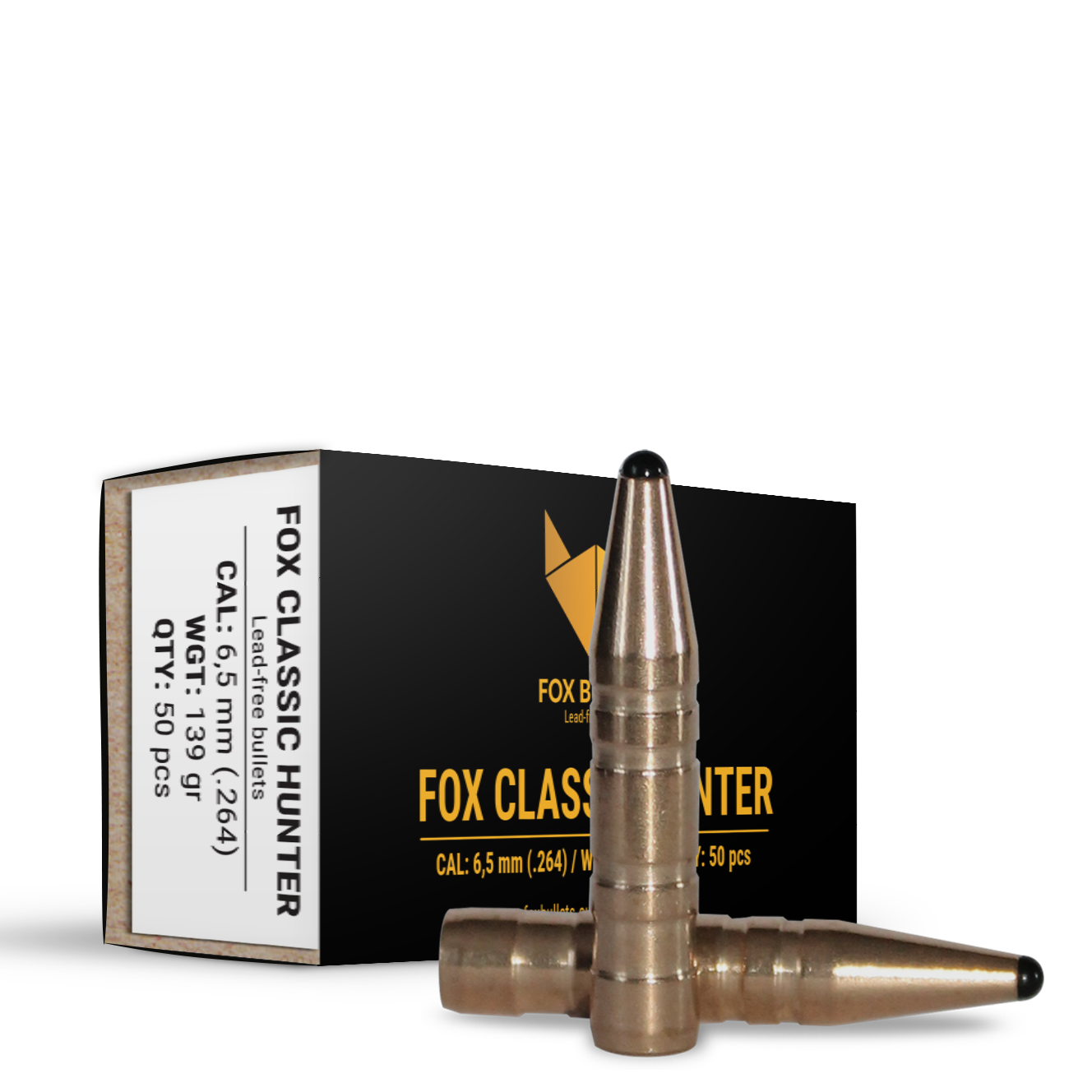
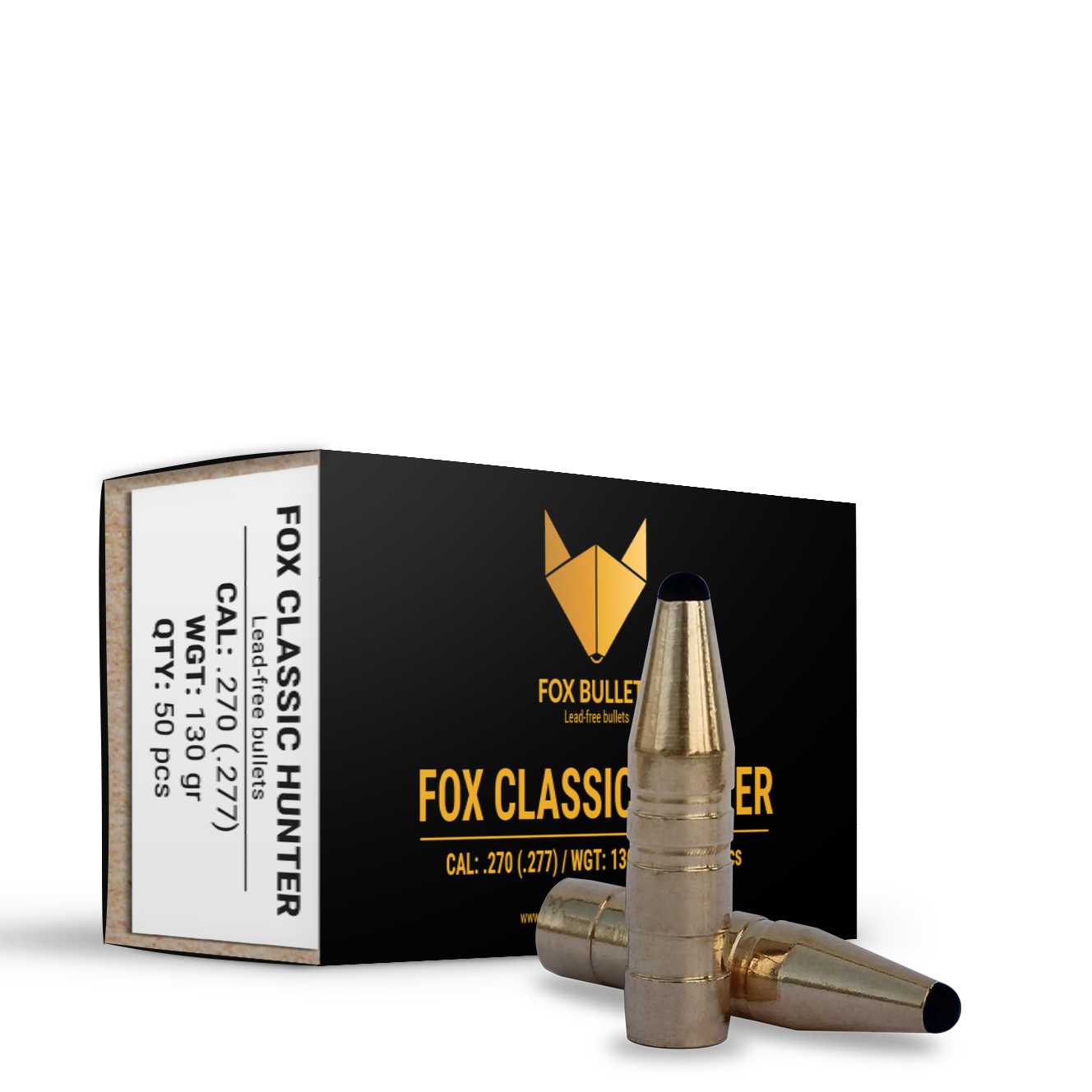
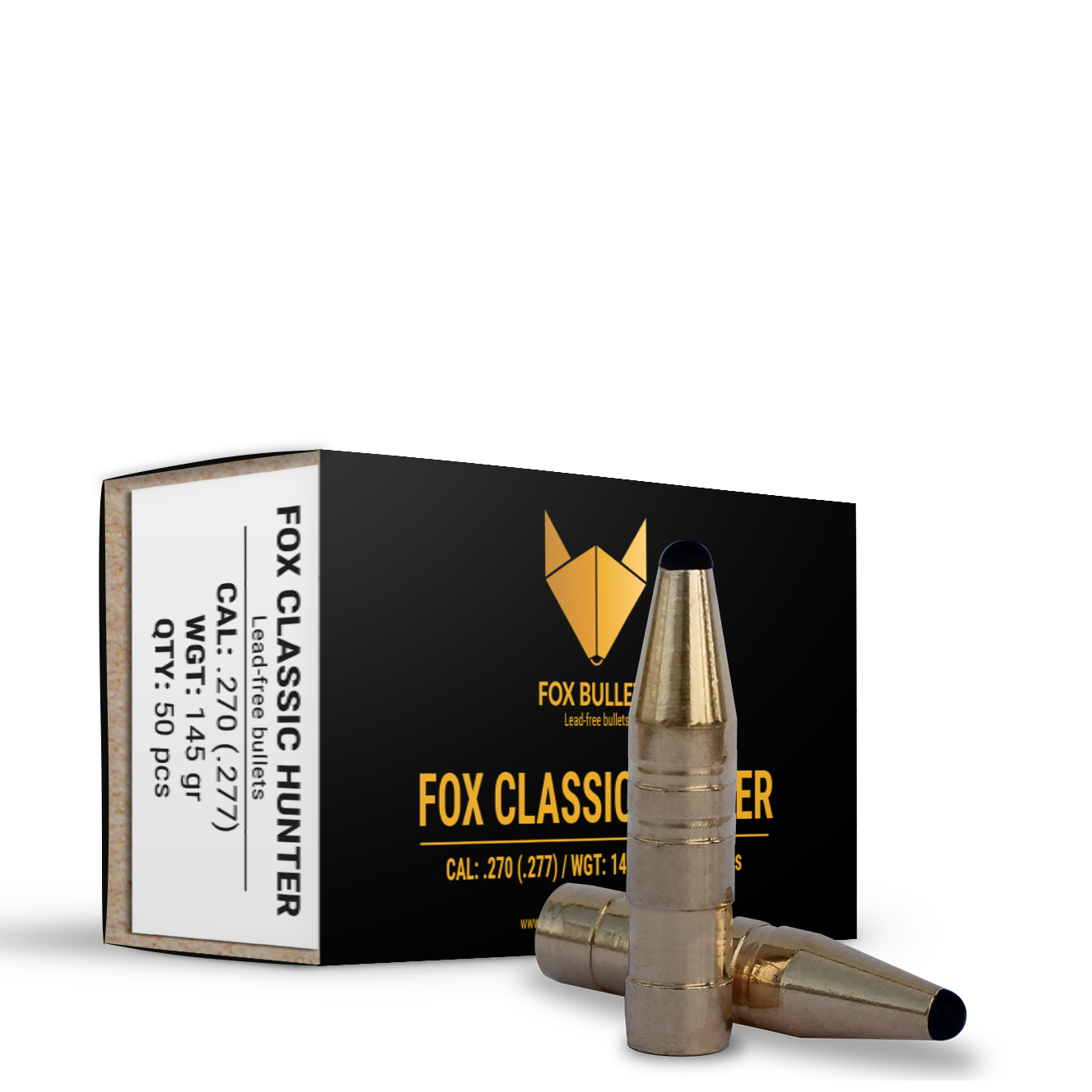
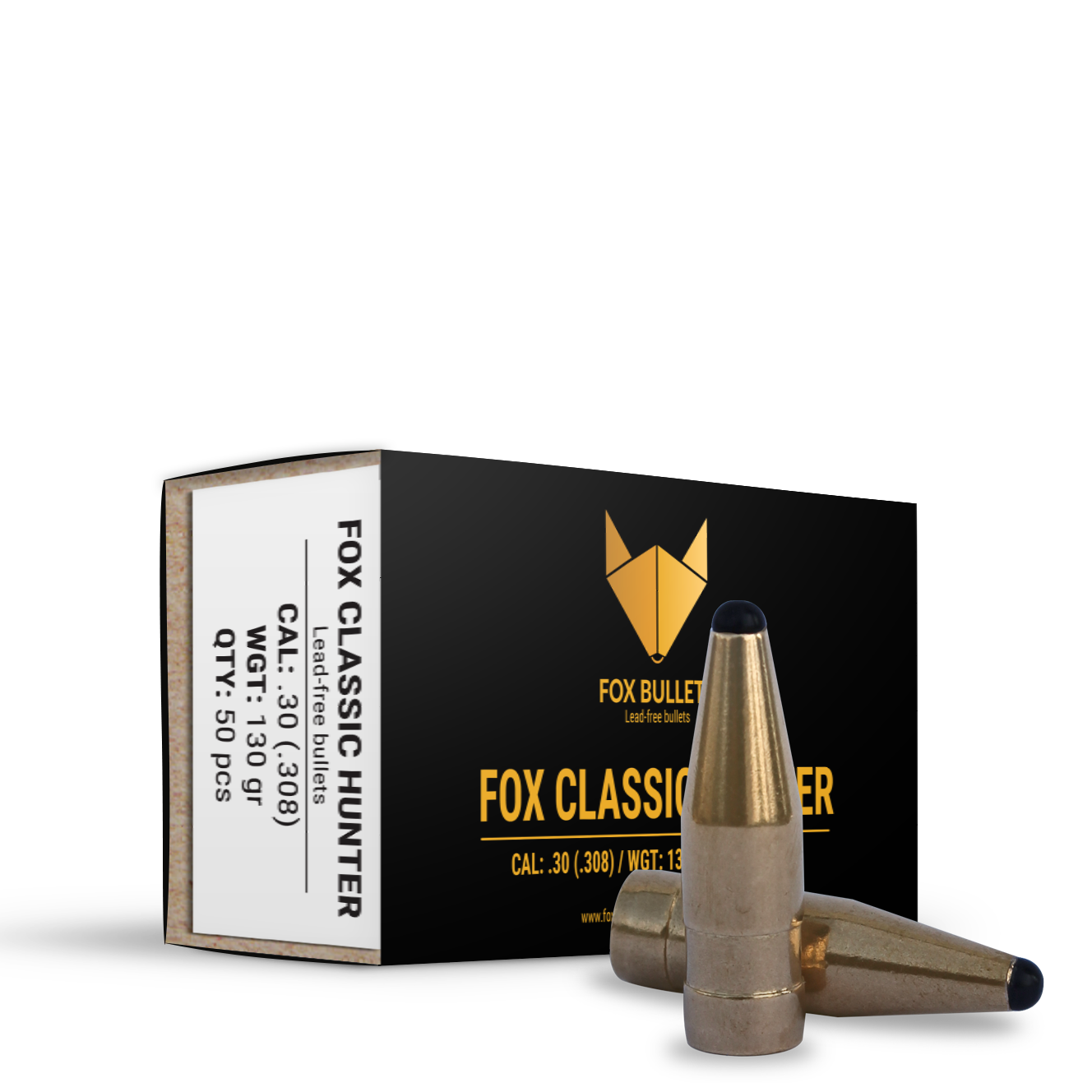
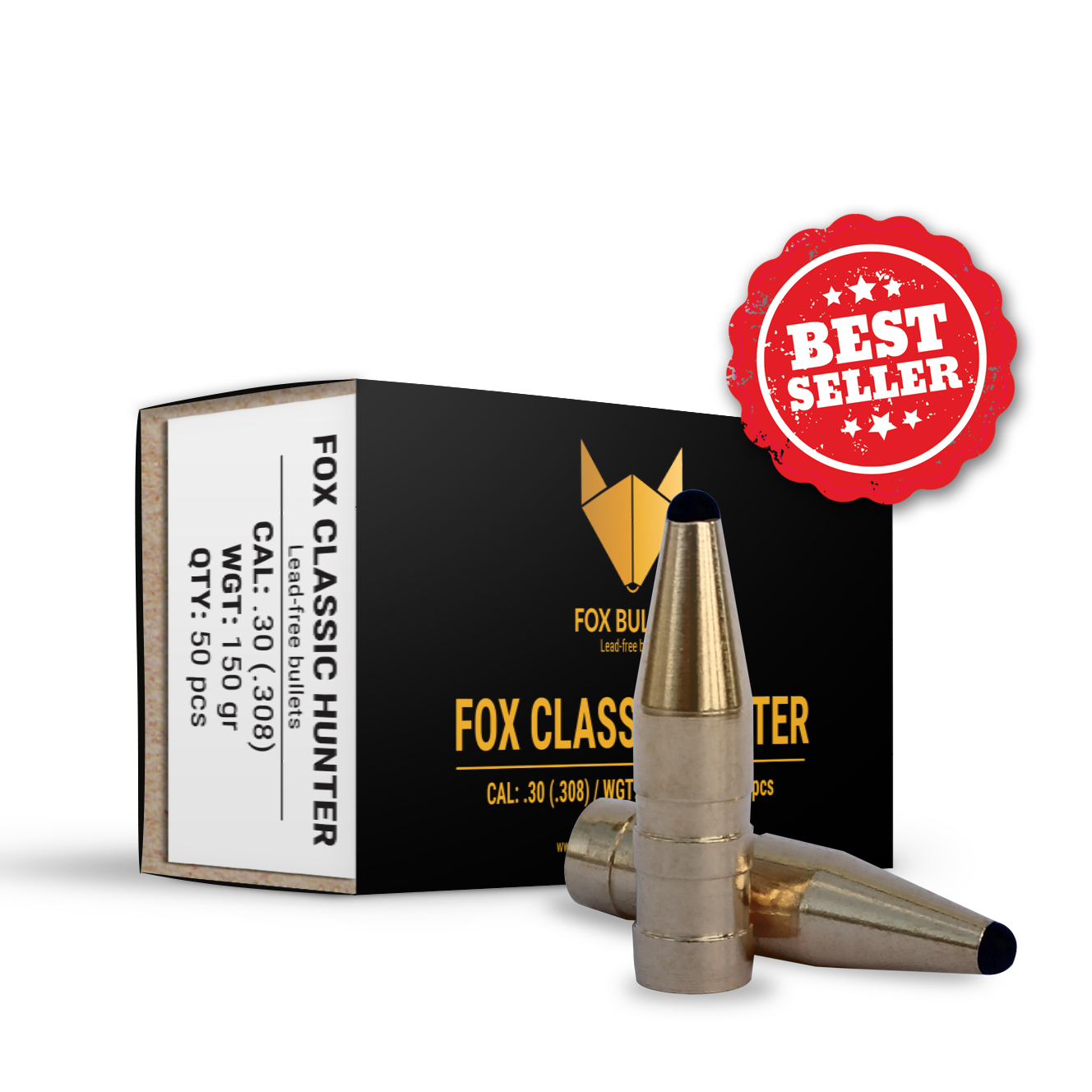
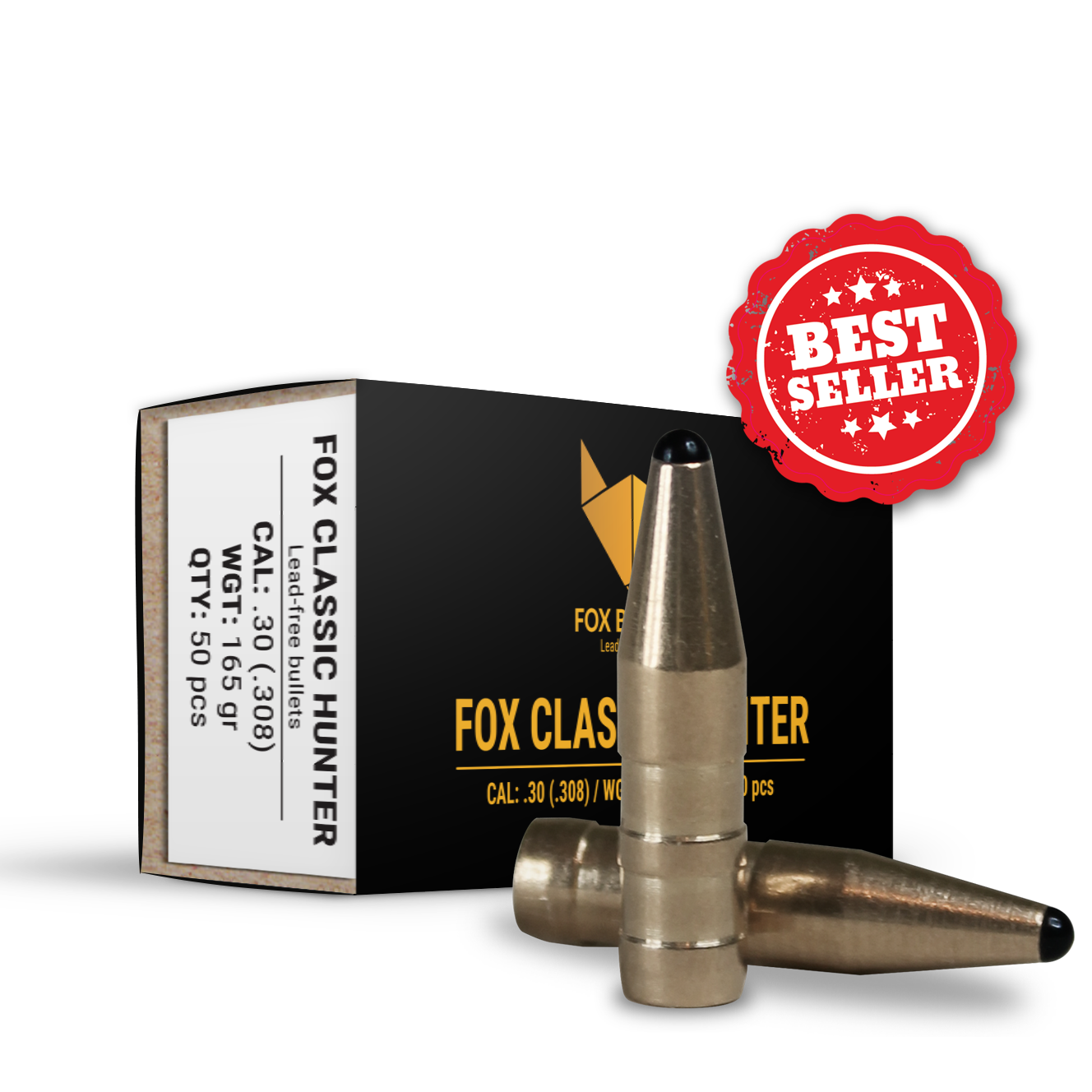
Fox Classic Hunter: copper-zinc alloy
Projectiles only: no powder, primers or loaded ammunition.
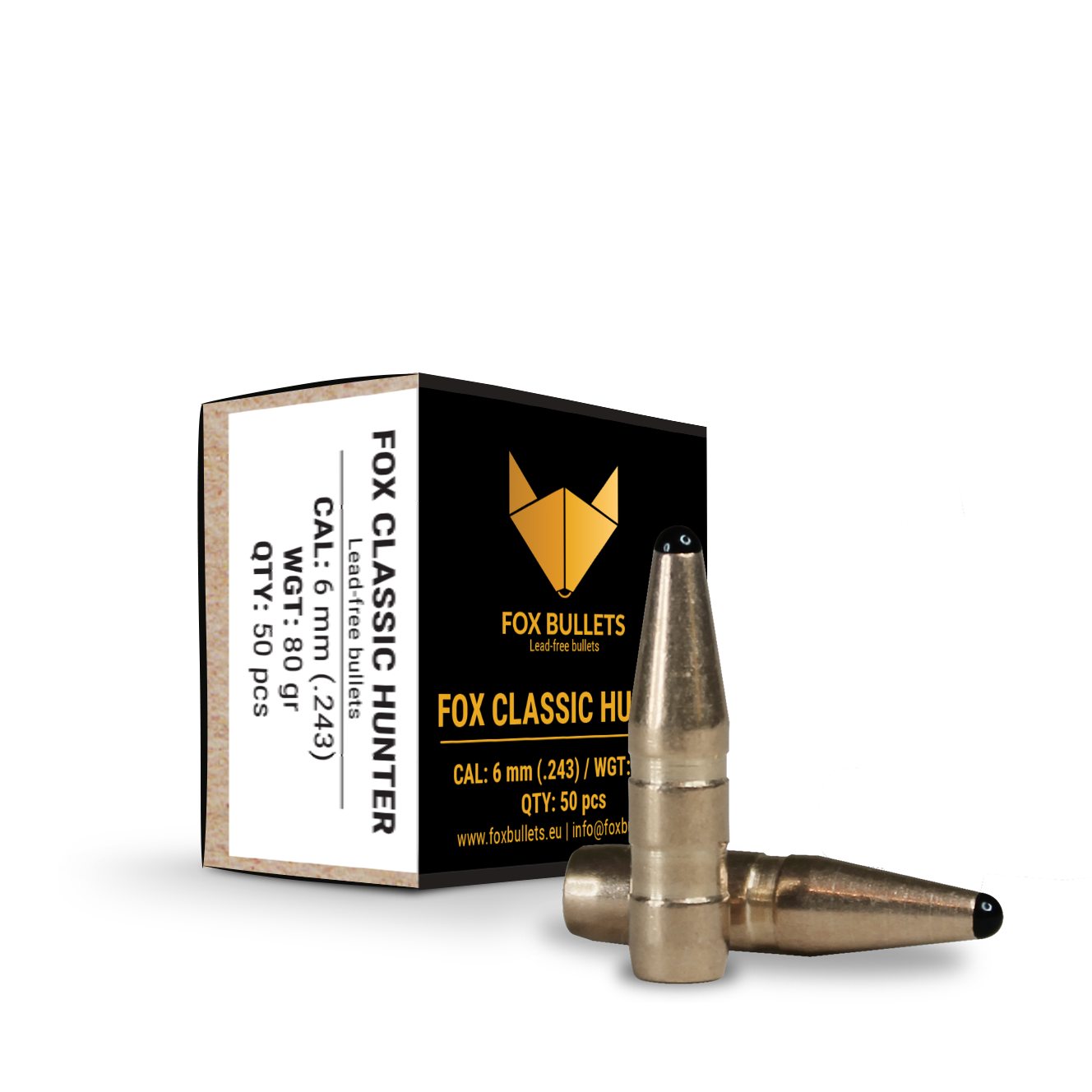
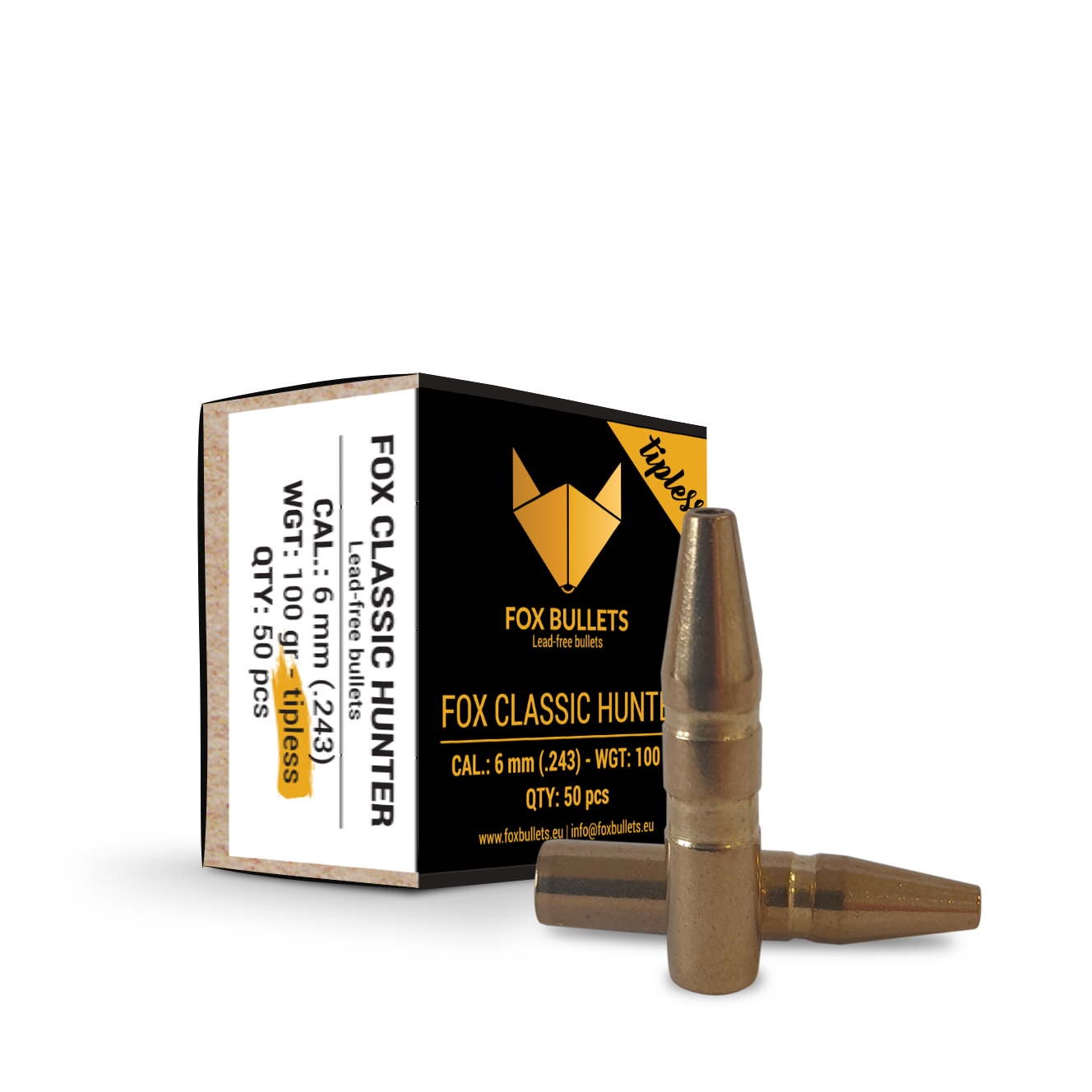
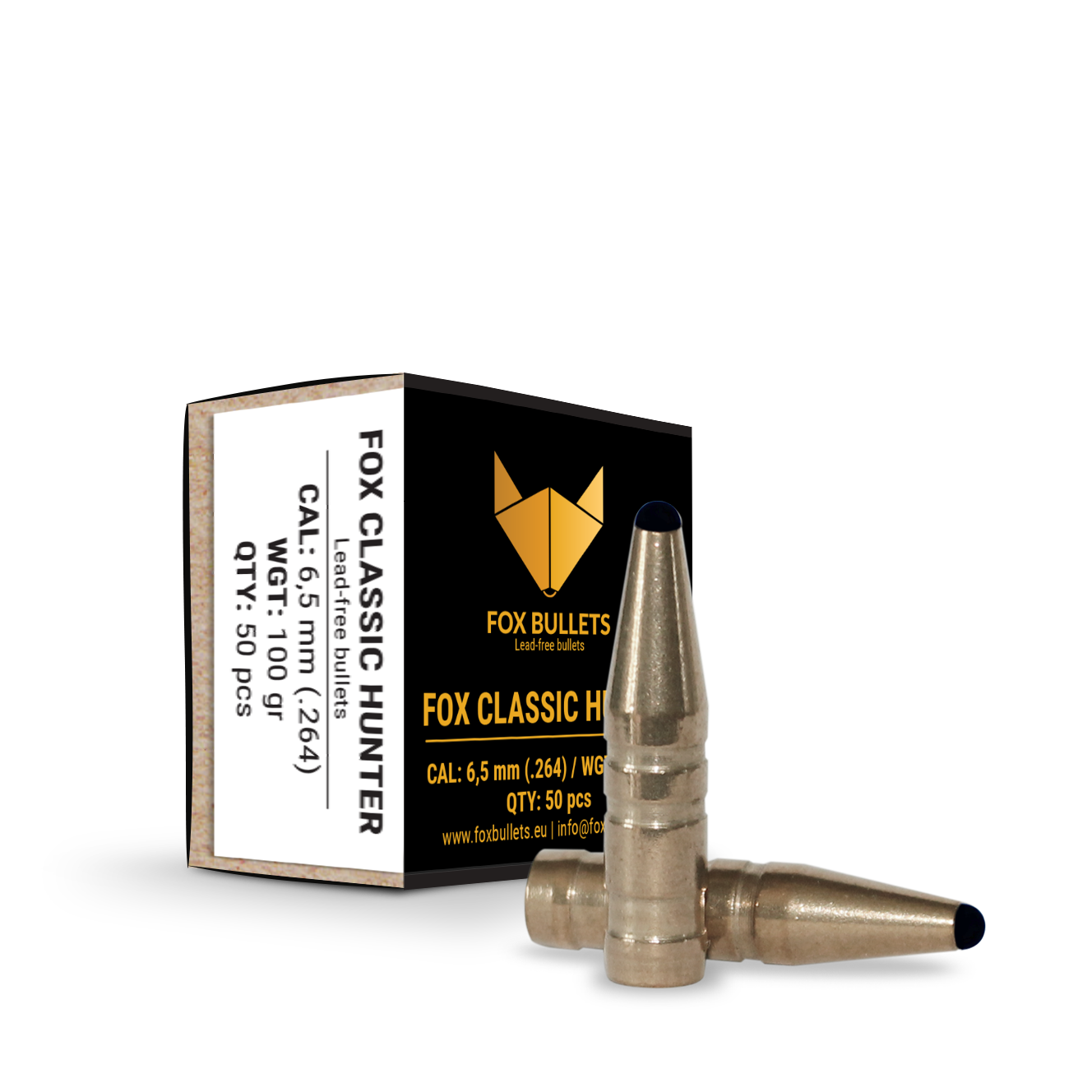
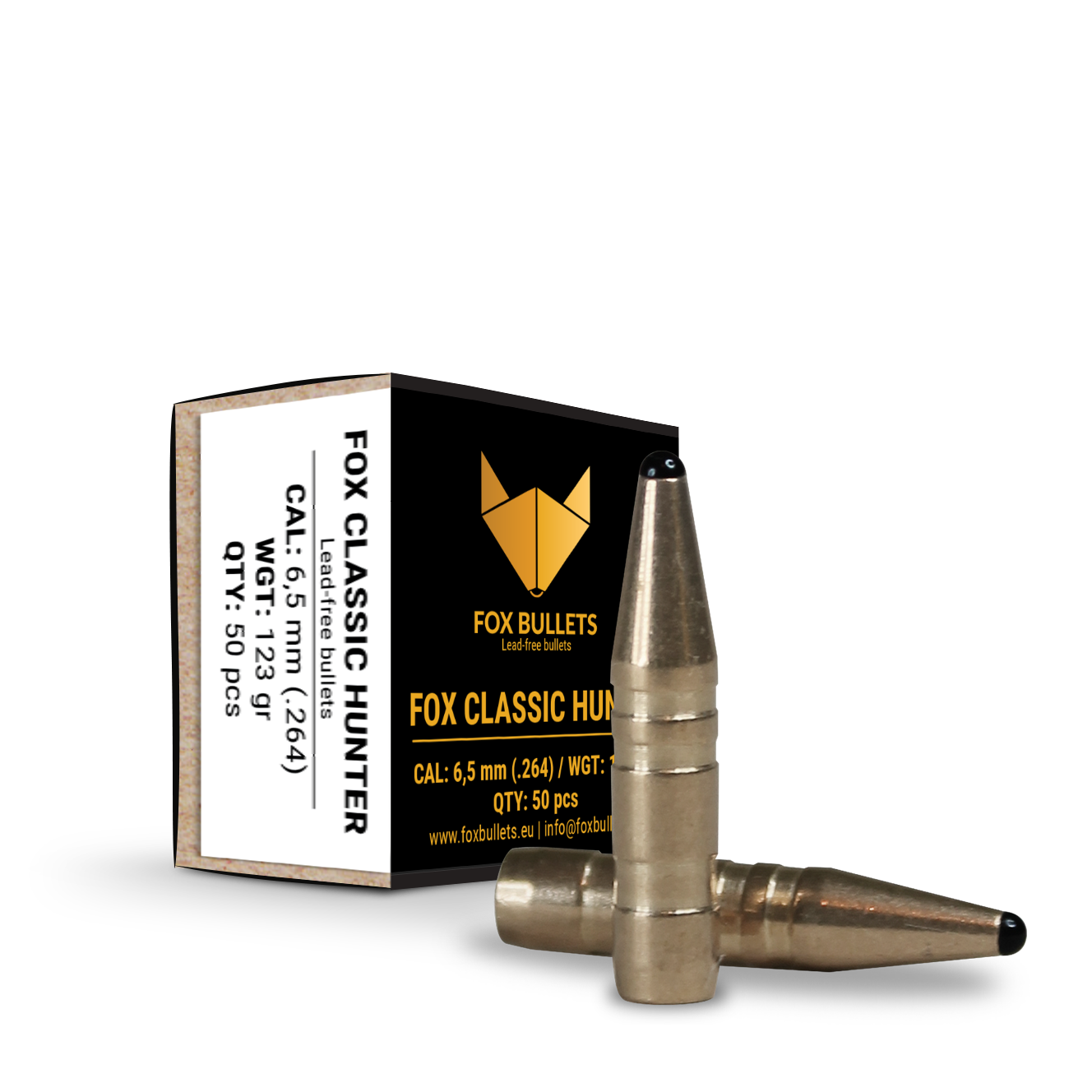
Is copper-zinc alloy better than solid copper for hunting bullets?
It is harder, fouls the barrel less and holds its shape better under firing pressure. Whether that makes a specific bullet better depends on how well the expansion is engineered, since a harder material does not open up on its own.
What is CuZn10?
A copper-zinc alloy of roughly 90 per cent copper to 10 per cent zinc. It is the material Fox Classic Hunter bullets are made from, and it is harder than both pure copper and the gilding metal used in some other lead free bullets.
Do copper-zinc bullets foul the barrel less than copper?
Generally yes. The harder alloy is less inclined to smear into the rifling, so copper build-up accumulates more slowly and cleaning intervals stretch out.
Is brass the same as copper-zinc alloy?
Brass is copper and zinc, so CuZn10 is technically a brass. In bullet terminology the alloys are usually named by composition rather than called brass, because the ratio matters: CuZn10 at 10 per cent zinc behaves quite differently from a 30 per cent zinc cartridge brass.
Read next
Oxon Deer stocks the full Fox Classic Hunter range in 6mm, 6.5mm, .270 and .308, in boxes of 50. Browse the shop.